
Build self-worth, quiet your inner critic, and develop confidence that lasts.
A personal welcome and overview of this playbook from Zack.
Introduction
You might think confidence needs to come before action.
People tell themselves:
“Once I feel more confident, I’ll speak up.”
“Once I stop doubting myself, I’ll apply.”
“Once I feel ready, I’ll take the risk.”
But confidence develops in the opposite direction. You act first, then your mind begins collecting evidence that you can handle the situation.
This is why waiting to feel confident (similar to motivation) is a trap. If confidence depends on experience, but you avoid the experiences that would help build it, confidence has no opportunity to grow.
Confidence Is Built Through Evidence
Confidence is not simply positive thinking, it’s built from a collection of evidence your mind has stored.
If you repeatedly avoid difficult situations, your mind may begin to conclude:
“I probably can’t handle this.”
But if you repeatedly enter difficult situations, make mistakes, adjust, and continue, a different belief can begin to form:
“This may be uncomfortable, but I can work through it.”
That’s a more durable, real form of confidence.
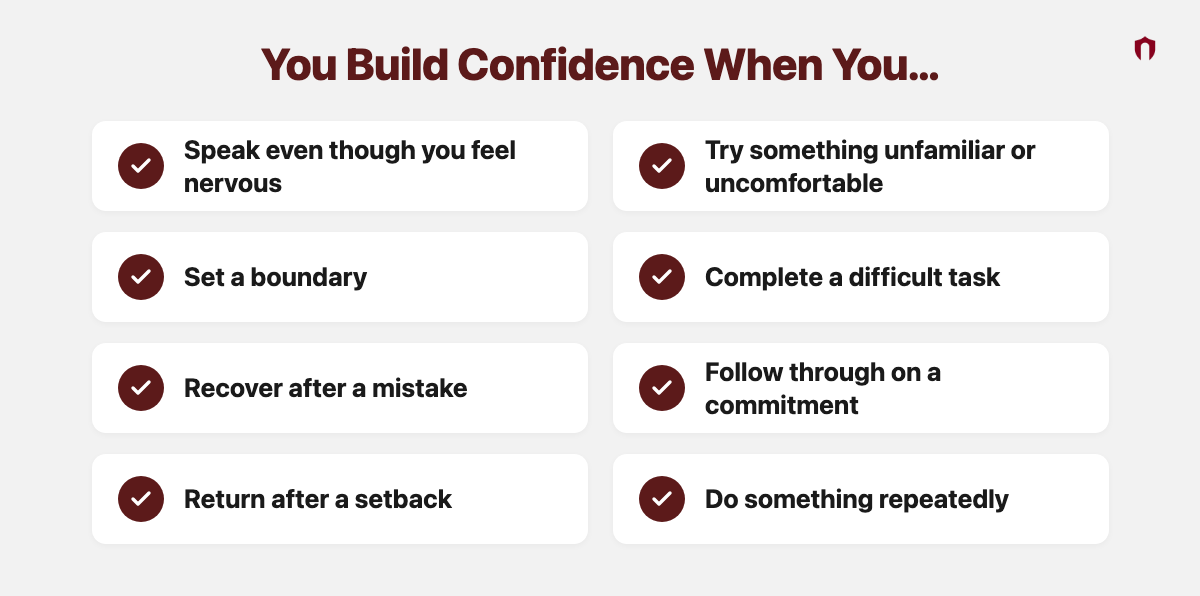
Confidence isn’t just about your ability to succeed, it’s about the evidence you accumulate that you can try, adapt, learn, and continue on.
Confidence Doesn’t Mean Feeling Certain
One of the biggest misconceptions about confidence is that confident people feel sure of themselves all the time.
They do not.
Confidence can exist alongside anxiety, doubt, nervousness, and discomfort.
You can be nervous before a presentation and still speak effectively.
You can question whether you are ready for an opportunity and still pursue it.
You can feel intimidated in a new environment and still participate.
The goal is not:
“I must eliminate doubt before I act.”
A better goal is:
“I can act even while doubt is present.”
That distinction matters because uncertainty and discomfort are unavoidable whenever you are doing something meaningful, unfamiliar, or challenging.
Competence Can Create Confidence
Sometimes low confidence is not just a mindset problem. Sometimes you simply need more practice.
If you have never performed a skill before, uncertainty is reasonable. Confidence can increase as competence increases.
That may require:
Someone learning public speaking may become more confident because they’ve practiced dozens of times.
Someone starting a new job may feel more confident after learning the systems.
Someone beginning strength training may become more comfortable after learning proper technique.
You don’t need to believe in your ability when it’s unsupported by evidence. But your belief in your ability to improve over time through reps and experience can give you the confidence you need to continue.
Keep Promises to Yourself
Confidence is influenced by self-trust.
When you repeatedly tell yourself you’ll do something and consistently avoid it, your mind notices.
When you follow through, even in small ways, you create a different pattern.
For example:
These actions may appear small from the outside, but internally, they communicate an important message:
“I can rely on myself.”
That sense of self-trust and the habit of following through is an important foundation for confidence.
Stop Using Feelings as the Requirement
If your rule is:
“I will do it when I feel confident,”
you may wait indefinitely.
Feelings make for good consultants, but terrible CEOs. They should be used as guidance and information, not as decision makers.
You can feel afraid and still move forward.
You can feel awkward and still practice.
You can feel unmotivated and still begin.
You can feel uncertain and still make a thoughtful decision.
This is one of the most important shifts in building confidence. As we’ve discussed in several MFL Playbooks: the behavior comes first, the feeling catches up later.
Key Takeaways
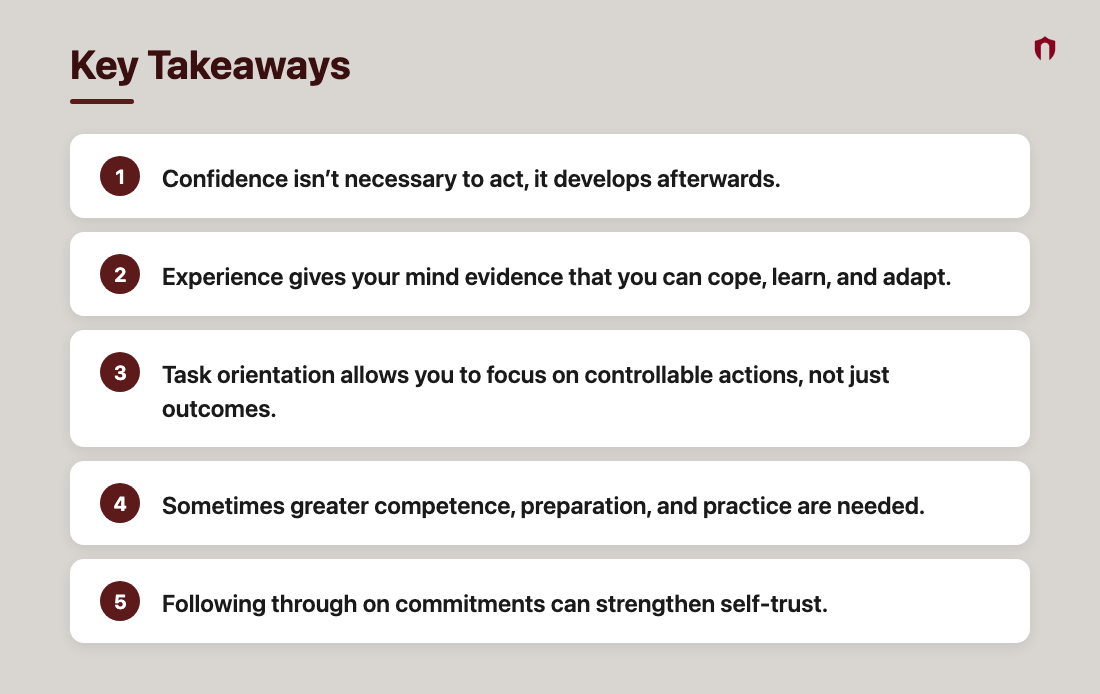
🧠 Your Mental Playbook
One Thing to Remember
You don’t become confident with time or patience. You become more confident by collecting evidence that you can act before you feel completely ready.
Reflect
Think of one area where you want greater confidence.
Ask yourself:
What am I afraid might happen?
Am I focusing more on how I will be judged than on the task itself?
What skill or preparation would increase my competence?
What small action would give me useful evidence?
What promise to myself could I follow through on this week?
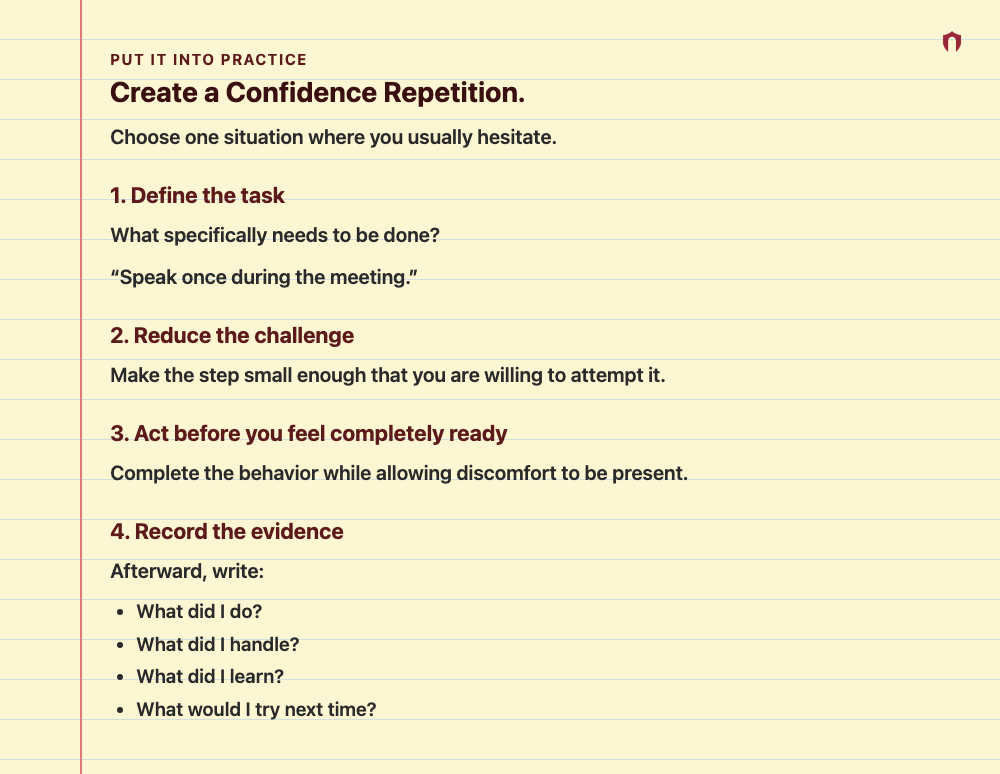
Put It Into Practice
“You don’t need to feel fearless to become more confident. You need to prove to yourself that fear doesn’t have to make your decisions.” — Zack Etter/Mental Fitness Lounge
Failure Is Valuable
Failure can hurt.
It can bring disappointment, embarrassment, frustration, regret, or self-doubt. And when something matters deeply, pretending failure shouldn’t affect you is unrealistic.
But failure, as bad as it may feel, is incredibly valuable for 2 main reasons
Failure Is Information
Failure contains feedback.
Sometimes the feedback is uncomfortable.
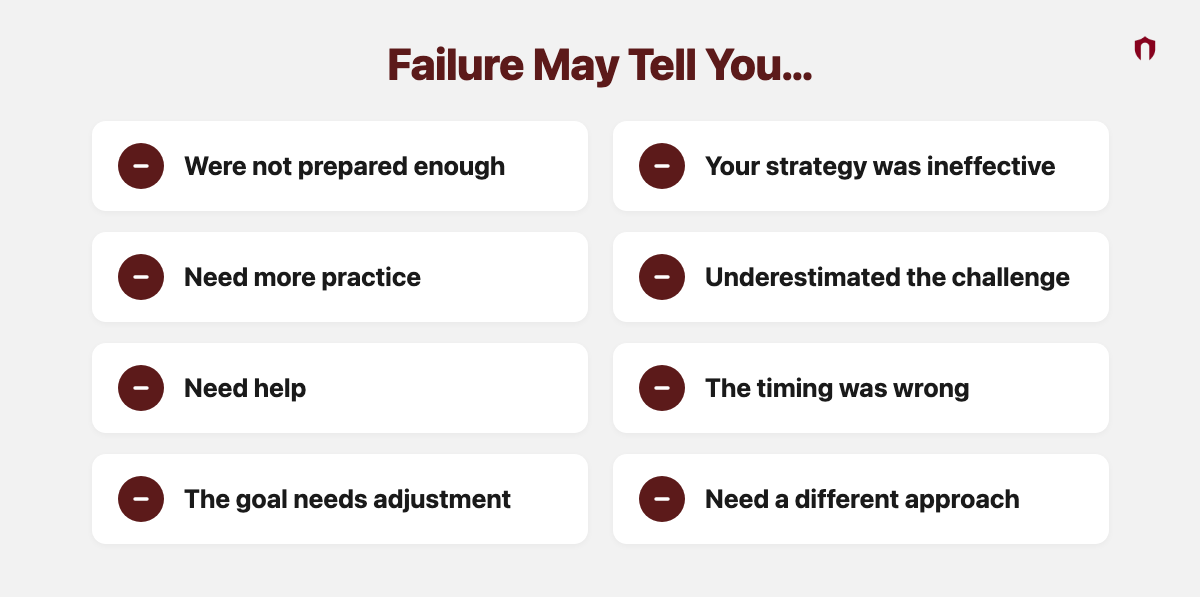
Other times, failure tells you very little about your ability.
You may have prepared well and still lost.
Someone else may have been more qualified.
Circumstances may have changed.
The outcome may have depended partly on factors you could not control.
This is why failure should be examined, not automatically interpreted.
Ask:
“What does this result actually tell me?”
That is a very different question from:
“What does this prove about me?”
Why Failure Can Feel So Personal
When you invest time, effort, hope, or identity into a goal, the outcome can feel like a reflection of you.
You may not simply think:
“The presentation did not go well.”
You may think:
“I am terrible at this.”
A rejection becomes:
“I am not good enough.”
A mistake becomes:
“I always mess things up.”
This is especially likely when your confidence depends heavily on achievement.
If success means:
“I am worthy.”
then failure can begin to mean:
“I am not.”
That makes every challenge psychologically expensive. You’re no longer simply trying to accomplish something, you’re trying to protect your identity.
Fear of Failure Leads to Avoidance
Sometimes the easiest way to protect yourself from failure is to avoid situations where failure is possible.
That might look like:
Avoidance can provide short-term relief. If you don’t try, you can’t clearly fail.
But there is a cost.
You also lose opportunities to:
The attempt to protect confidence can actually prevent confidence from developing.
Perfectionism Raises the Cost of Failure
Perfectionism can make mistakes feel unacceptable.
The standard becomes:
“If I can’t do it exceptionally well, something is wrong.”
This can create a cycle:
High expectations → fear of falling short → hesitation or overthinking → avoidance → less experience → lower confidence
Perfectionism may look ambitious from the outside, but underneath it’s typically driven by fear.
A perfectionist isn’t just trying to perform well, they’re trying to avoid the emotional meaning they’ve attached to performing poorly.
A healthier standard is:
“I can care deeply about the outcome without allowing the outcome to determine my entire view of myself.”
Separate Performance From Identity
Performance can be evaluated, but your identity needs to be larger than performance.
You can say:
“I was underprepared.”
without saying:
“I am incompetent.”
You can say:
“I handled that conversation poorly.”
without saying:
“I am a terrible partner.”
You can say:
“My business idea didn’t work.”
without saying:
“I am incapable of succeeding.”
This isn’t about avoiding responsibility. In fact, separating identity from performance can make responsibility easier because it focuses on actions and outcomes rather than judgment. When a mistake isn’t treated as proof that you are fundamentally defective, you can examine it more clearly.
You can ask:
Evaluate the performance without putting your entire identity on trial.
Rejection Is Not Always a Verdict
Rejection can be particularly difficult because another person appears to be evaluating you.
You may be rejected by:
It’s easy to translate:
“They didn’t choose me.”
into:
“I wasn’t good enough.”
But rejection is not a complete measurement of your value.
It can reflect:
Sometimes rejection contains useful feedback, sometimes it doesn’t.
Disney actor Joshua Bassett told a story about auditioning for roles and getting rejected over and over. While his confidence in himself and his faith in having an acting career was running low, he became a finalist for a role in a TV show. After crushing the audition, his agent told him that the director chose another actor for the part because Joshua’s hair reminded the director of her ex-husband’s.
Sometimes the reason for rejection has nothing to do with you, is ridiculous in general, and wasn’t anything you could’ve changed.
The healthier response is neither:
“Their opinion means everything.”
nor:
“Their opinion means nothing.”
It’s this:
“I can consider what this experience teaches me without allowing someone else's decision to define me.”
Build Confidence in Recovery, Not Just Success
A fragile form of confidence says:
“I am confident because I think things will go well.”
A stronger form says:
“I believe things will go well, but I can respond even if they don’t.”
You can’t guarantee:
But you can strengthen your confidence in your ability to:
This changes the question from:
“What if I fail?”
to:
“If I fail, what will I do next?”
Key Takeaways
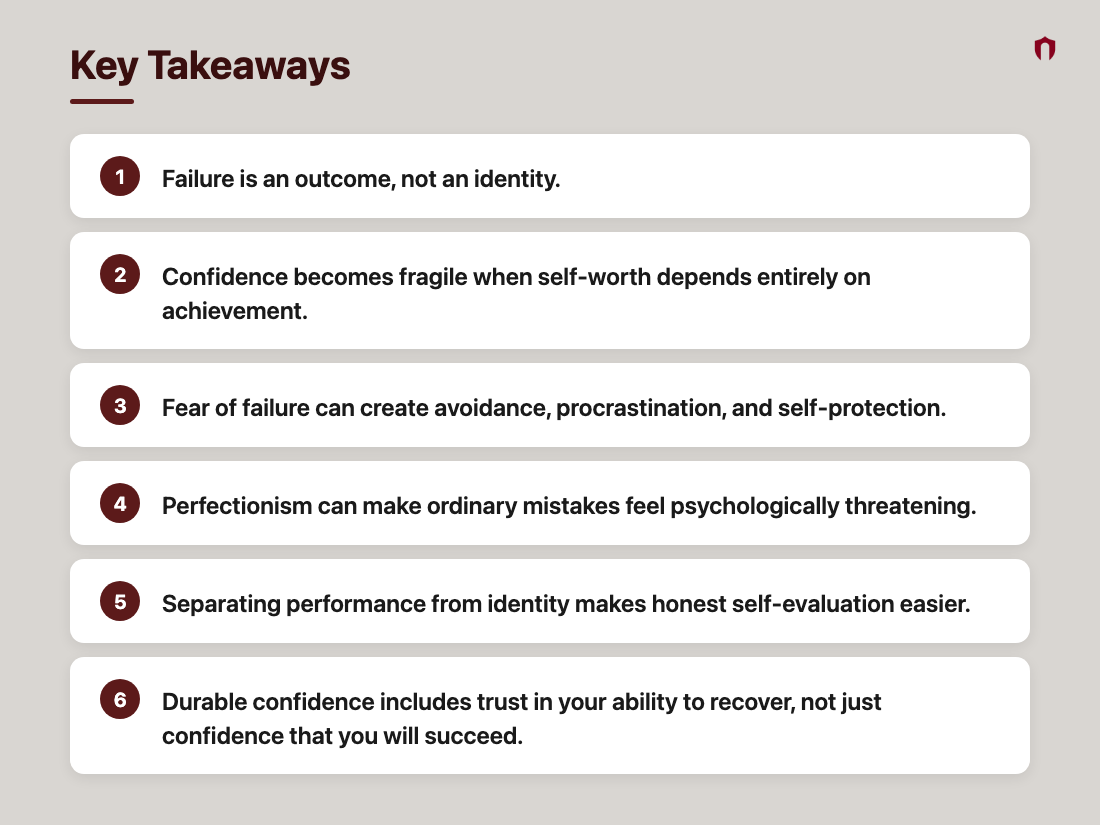
🧠 Your Mental Playbook
One Thing to Remember
A failed attempt is feedback on the approach, not a final verdict on your ability.
Use the experience to learn, adjust, and decide what comes next instead of letting one outcome define what you believe about yourself.
Reflect
Think about a failure or rejection that still affects your confidence.
Ask yourself:
What actually happened?
What story did I begin telling myself because of it?
Did I turn a specific outcome into a general judgment about myself?
What was within my control?
What was outside my control?
What useful information did the experience provide?
What would I do differently today?
Put It Into Practice
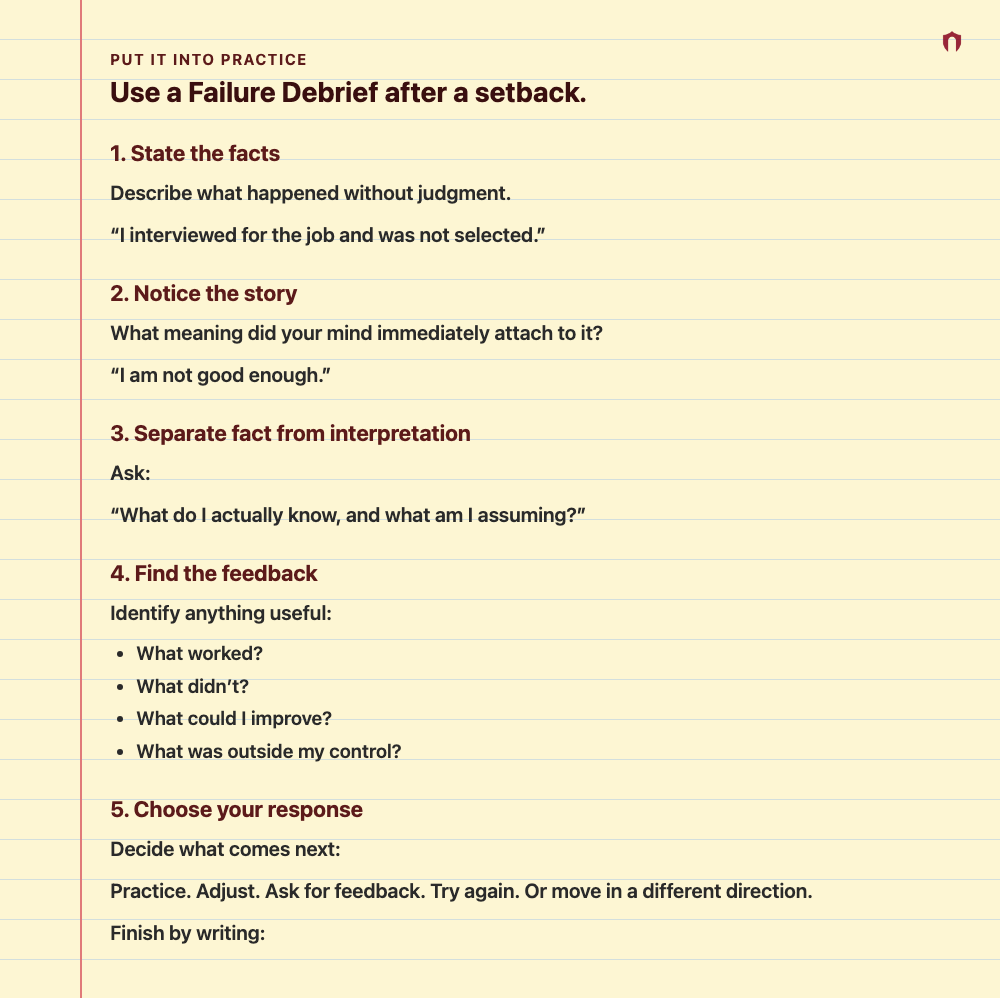
“A setback can tell you that something didn’t work. It doesn’t get to decide what you are worth.” — Zack Etter/Mental Fitness Lounge
Introduction
Confidence and self-worth are related, but they’re not the same thing.
Confidence is connected to what you believe you can do.
Self-worth is connected to how you value yourself as a person.
You might feel confident giving a presentation, playing a sport, leading a team, or performing a particular skill. That confidence can increase or decrease depending on experience, preparation, and results.
Self-worth goes deeper.
It answers questions such as:
“How do I see myself when I am not performing well?”
“What happens to my sense of value when someone rejects me?”
“Do I still respect myself when I make a mistake?”
When self-worth depends heavily on success, appearance, productivity, money, status, or approval, life can become an ongoing test of whether you are “good enough.”
Building self-worth from the inside out means developing a sense of value that can survive the inevitable changes in performance, circumstances, and other people's opinions.
When Worth Becomes Conditional
Many people unintentionally create conditions for being worthy. Their internal rules might require success, to be desired by others, productivity, looking good, approval, etc. to feel valuable.
There’s nothing wrong with wanting success, connection, achievement, or recognition. The problem is making those things the price of admission for feeling worthy.
If your worth depends on outcomes, your relationship with yourself becomes unstable.
Success brings temporary relief. Failure creates self-doubt. Praise raises your worth. Criticism lowers your worth. Acceptance makes you feel valuable. Rejection makes you question yourself.
Your sense of self is constantly being handed over to circumstances that you can’t fully control.
The Approval Trap
Humans naturally care what other people think. Belonging matters. Relationships matter. Feedback matters.
We don’t need to (and are unable to) become completely indifferent to other people's opinions.
The problem begins when approval becomes the primary source of self-worth.
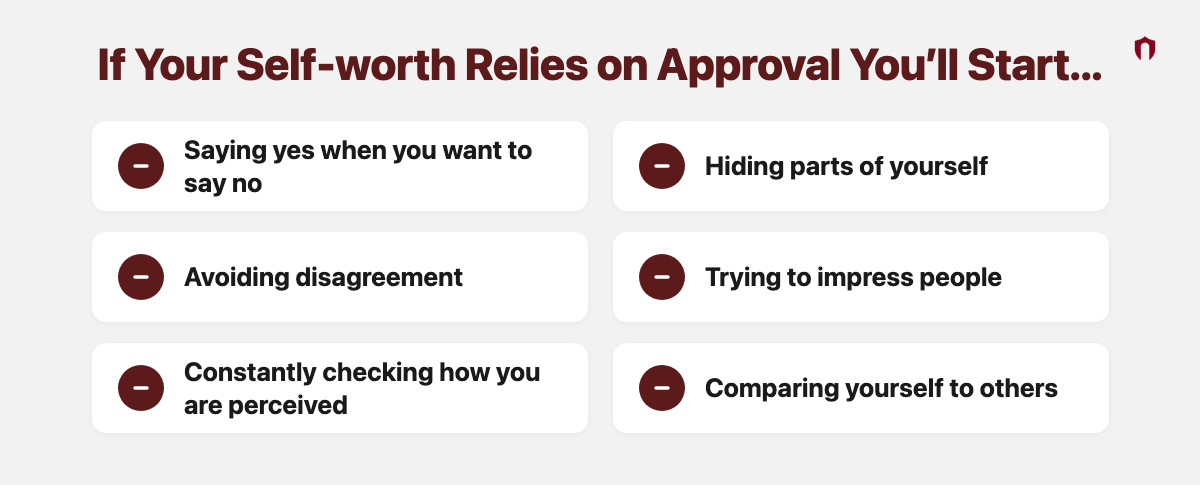
Approval can feel reassuring, but it’s unreliable. Different people will have different opinions of you. Someone may admire a quality that another person dislikes. Someone may find a particular type or look attractive when others don’t.
You can’t build a stable sense of self around receiving universal approval because universal approval doesn’t exist.
Choosing to live your life and make decisions based on your own values and self-respect leads to more fulfillment, clearer direction, and exudes confidence.
Comparison Distorts the Picture
Comparison can make self-worth especially fragile.
You see:
and use it as evidence about yourself.
The mind creates rankings:
“They are ahead, so I must be behind.”
“They have more, so I must be less.”
But comparison usually leaves out most of the information.
You may be comparing:
Another person's success can be real without becoming evidence of your inadequacy.
Be Careful With the Inner Critic
Some believe harsh self-criticism keeps them motivated.
They think:
“If I stop being hard on myself, I will become complacent.”
But there is a difference between accountability and self-attack.
Accountability says:
“I didn’t handle that well. I need to improve.”
Self-attack says:
“I am pathetic.”
Accountability focuses on behavior. Self-attack focuses on identity.
You can acknowledge mistakes, weaknesses, and areas for growth without humiliating yourself internally. In fact, excessive self-criticism can make growth harder by increasing shame, avoidance, fear of failure, and defensiveness.
Self-Compassion Is Not Letting Yourself Off the Hook
Self-compassion is sometimes misunderstood as telling yourself that everything you do is acceptable. In reality, self-compassion means responding to your own difficulty with some of the humanity you might offer another person you care about.
You can say:
“I made a mistake, and I need to take responsibility.”
You can acknowledge:
“I am disappointed in myself.”
Self-compassion allows two things to exist together:
I can accept myself as a person while still expecting myself to grow.
Acceptance and accountability are not opposites – they’re best experienced together.
Build Worth Around Values, Not Outcomes
One way to create a more stable foundation is to place greater emphasis on values.
Values describe how you want to live.
Examples might include:
Unlike outcomes, values can be practiced regardless of whether everything goes according to plan.
You may not control whether you receive the promotion, but you can control whether you act with integrity.
You may not control whether someone chooses to continue a relationship, but you can control whether you communicate honestly and respectfully.
You may not control whether a project succeeds, but you can control whether you give thoughtful effort and learn from the experience.
This creates a more stable way of evaluating yourself.
Instead of asking only:
“Did I win?”
you can also ask:
“Did I behave in a way that reflects the person I want to be?” (which by the way will lead to winning more often than not)
Know What You Respect About Yourself
Self-worth shouldn’t require believing that you’re exceptional at everything. You can recognize weaknesses without erasing strengths.
Consider what you respect about yourself that isn’t entirely dependent on achievement.
Perhaps you:
These qualities may not appear on a résumé or social media profile, but they are a positive part of who you are.
If your entire self-concept is built around measurable achievements, you’ll overlook the qualities that actually shape your character.
Allow Yourself to Be a Work in Progress
People sometimes believe:
“I will finally feel good enough when I fix what I dislike about myself.”
But there will almost always be another area to improve.
Another goal. Another insecurity. Another mistake. Another person doing better at something.
If worth is postponed until you become a finished product, it will remain permanently out of reach.
You can hold two truths at the same time:
There are parts of myself I want to improve.
and
I don’t have to hate who I am today in order to become better for tomorrow.
Protect Your Worth When Life Changes
There will be times when the things you use to define yourself change.
You might:
If your identity rests entirely on one role or achievement, losing it can feel like losing yourself.
A broader sense of worth gives you more psychological stability.
You are more than:
These things can matter tremendously, but they only tell pieces of your whole story and who you are.
Key Takeaways
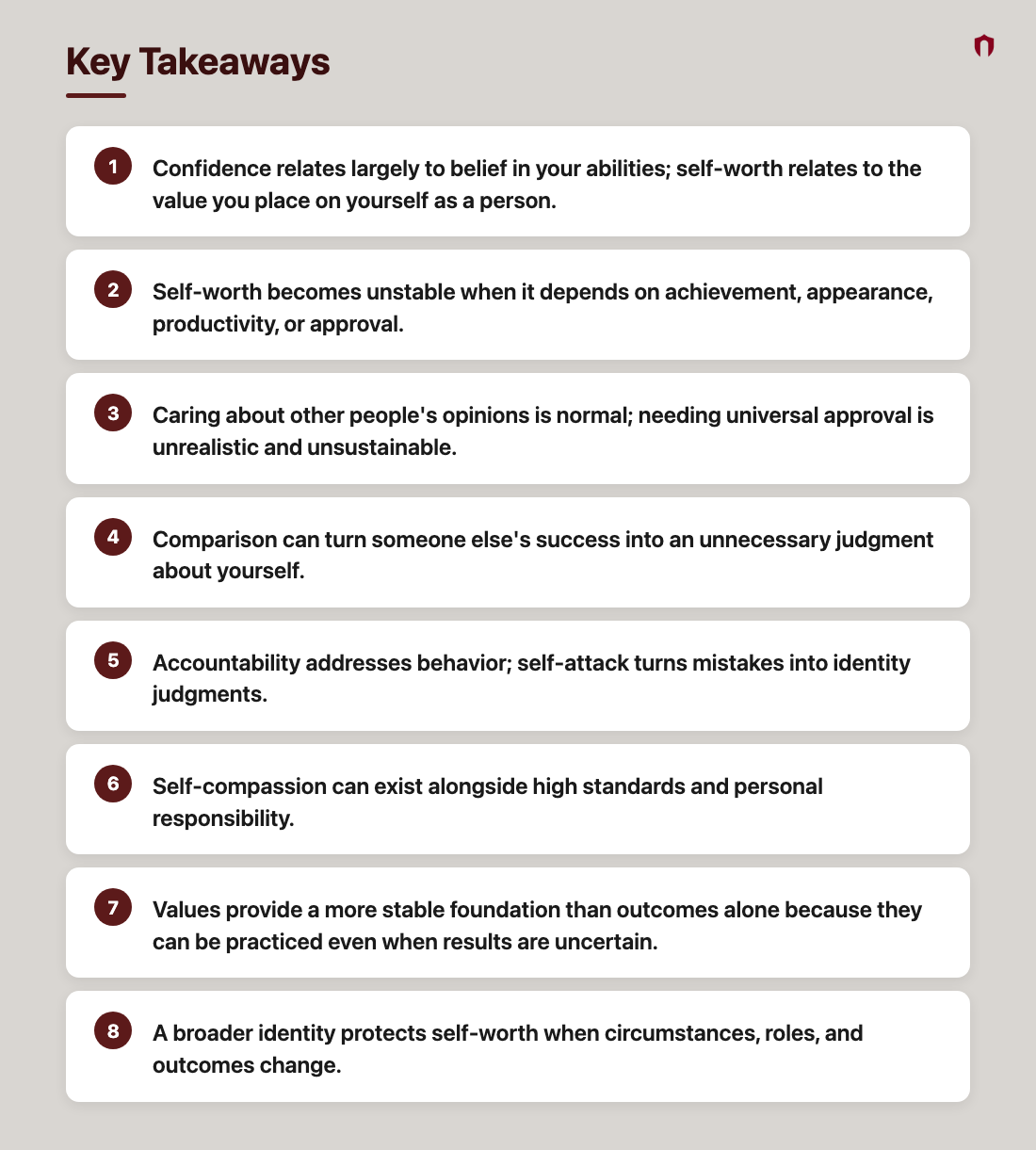
🧠 Your Mental Playbook
One Thing to Remember
Your worth becomes fragile when you require the outside world to keep proving it to you.
Achievement, praise, appearance, relationships, and success can add meaning and fulfillment to your life, but they are unstable foundations for deciding whether you deserve your own respect.
Reflect
Ask yourself:
What makes me feel “good enough”?
What causes me to question my worth?
Which achievements have I made part of my identity?
Whose approval has too much influence over how I see myself?
Where do I compare myself most often?
What qualities do I respect about myself that have nothing to do with status or achievement?
Which values do I want my life to represent?
Then complete:
“Even if I lost ________, I would still be someone who…”
Try to answer using qualities, values, and character rather than achievements.
Put It Into Practice
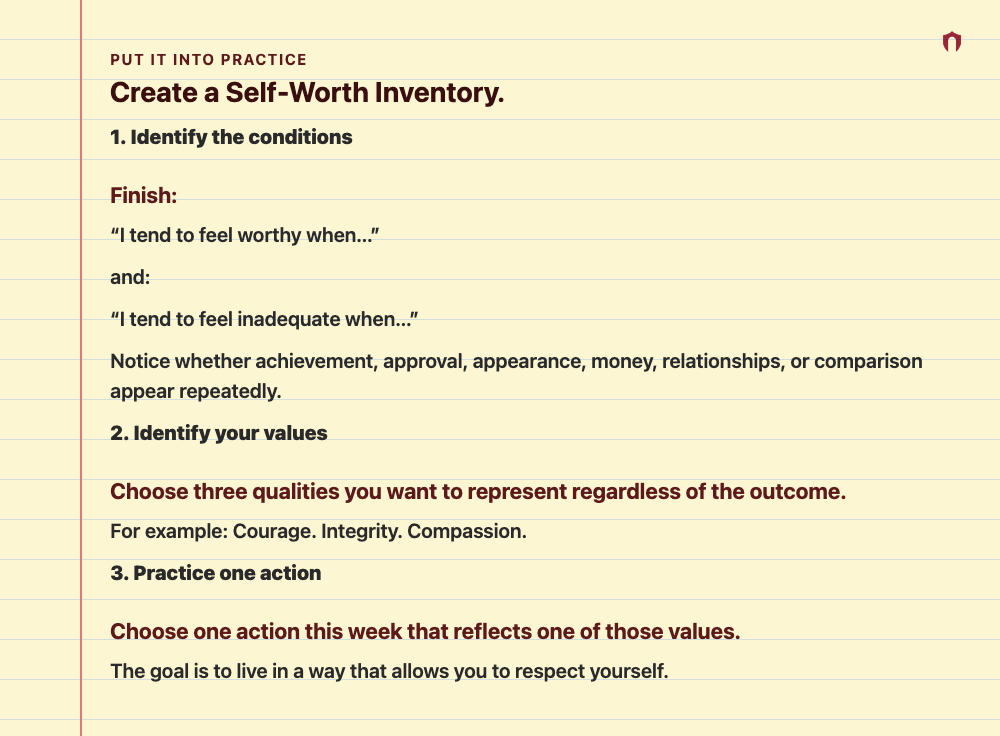
“Your accomplishments can change your life, but they don’t determine your value.” — Zack Etter/Mental Fitness Lounge
Work one-on-one with Zack to build a plan tailored to your situation.