
Navigate heartbreak, have healthy/meaningful relationships, and rebuild your sense of self.
A personal welcome and overview of this playbook from Zack.
What Makes a Healthy Relationship?
Many people believe that compatibility alone determines whether a relationship will succeed. While compatibility certainly matters, long-term relationship success depends far more on how two people communicate, solve problems, and support one another during life's inevitable challenges. In other words, a lot of people can have fun and get along during the good times, but the meaningful relationships in our life that withstand the test of time are ones that get through the bad times with relative ease and even come out stronger on the other side.
Healthy relationships generally include several important characteristics:
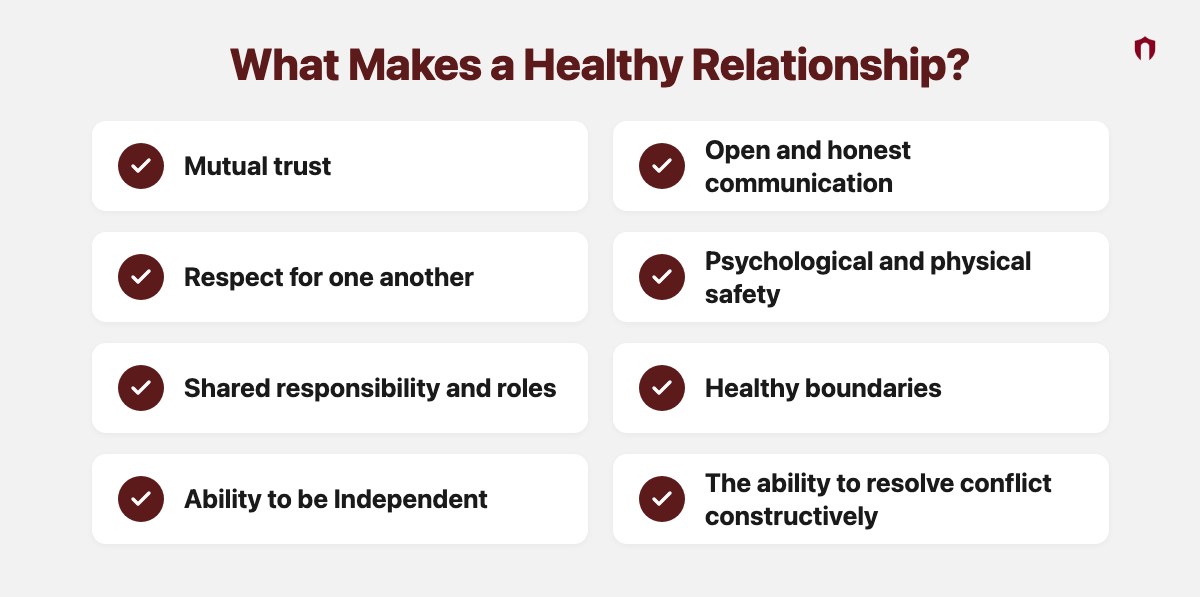
Healthy relationships allow both individuals to maintain their own identity while also building a meaningful life together. Each partner should feel comfortable expressing thoughts, emotions, opinions, and needs without fear of ridicule, manipulation, or retaliation.
An important misconception to address: healthy relationships are not ones without conflict. Disagreements are a normal part of every close relationship. The difference lies in how conflict is handled. Healthy couples and friends focus on solving problems together rather than trying to "win" arguments against one another. The respect and open-mindedness shown during difficult conversations can lead to a stronger relationship on the other end of it.
Love vs. Infatuation
Many relationships begin with intense attraction and excitement. This early stage is often referred to as infatuation or the "honeymoon phase." During this period, individuals may experience intense emotional highs, frequent thoughts about their partner, increased passion, and a tendency to overlook flaws or incompatibilities. In intimate relationships, this period may be highlighted by a high frequency of sex.
While this stage can be exciting, it is usually temporary. As relationships mature, intense excitement often gives way to a deeper form of connection built on trust, commitment, emotional intimacy, and mutual respect.
True love is less about constant excitement and more about consistently choosing to care for, support, and invest in another person over time. Healthy love allows two people to grow together while accepting one another as imperfect human beings.
Many people mistakenly interpret the fading of the honeymoon phase as evidence that the relationship is failing. In reality, for many couples, this transition marks the beginning of a more stable and meaningful connection. Ironically, moving on from the honeymoon phase and into a deeper, yet mundane part of the relationship is the best-case scenario for long-term relationships.
Communication
Communication is often considered the foundation of every healthy relationship. In addition to being able to openly say what's on your mind, it also involves active listening, validating emotions, expressing needs clearly, and approaching disagreements respectfully.
Healthy communication looks like:
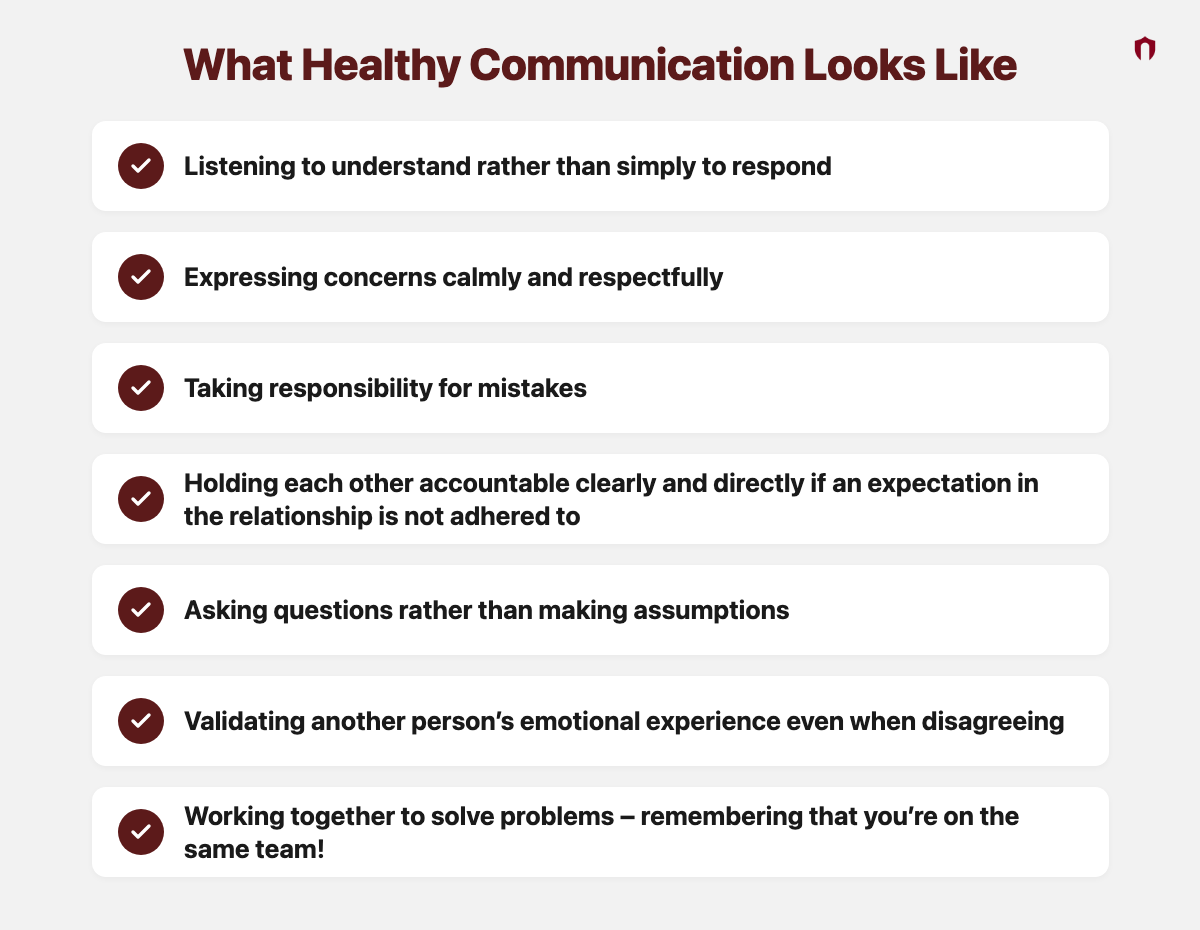
Poor communication, on the other hand, often involves criticism, defensiveness, contempt, avoidance, stonewalling, or passive-aggressive behavior. Over time, these patterns erode trust and emotional safety if they are not addressed.
One of the most important communication skills is recognizing that two people can experience the same situation differently. We perceive experiences based on a huge amount of highly subjective factors such as how we were raised, past outcomes, personality differences, and more. Understanding someone's perspective does not necessarily mean agreeing with it, but it demonstrates respect and strengthens emotional connection.
Healthy Boundaries
Boundaries define what behaviors are acceptable and expected within a relationship while protecting each person's emotional, physical, and psychological well-being. Healthy boundaries allow individuals to maintain their identity while remaining emotionally connected.
Boundaries may involve:
Many people mistakenly believe that setting boundaries is selfish or controlling. In reality, healthy boundaries reduce resentment, clarify expectations, and strengthen trust by creating emotional safety for both individuals.
Green Flags and Red Flags
Healthy relationships tend to display numerous "green flags" and "red flags" that indicate the likelihood of long-term compatibility.
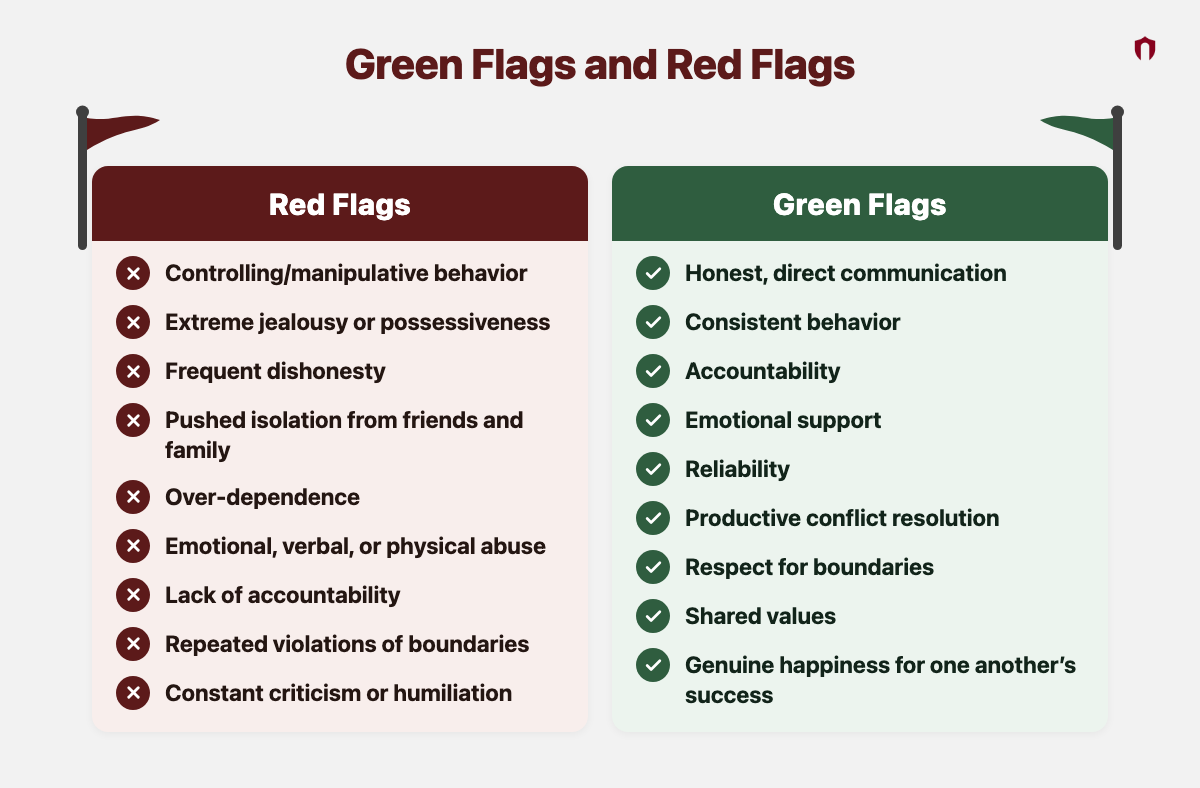
While everyone makes mistakes, persistent patterns of disrespect, manipulation, or abuse should never be ignored. Note that many of the "red flag" behaviors derive from unhealthy attachment styles, which is addressed in the next module of this playbook.
Common Misconceptions About Relationships
Many expectations about relationships come from movies, social media, and unrealistic cultural constructs. This leads to unfair expectations of partners who will struggle to live up to the portrayal of "romance" and "happiness" shown in media.
One common misconception is that healthy couples never argue. In reality, conflict is unavoidable whenever two people share their lives. Successful relationships are defined less by the absence of conflict and more by how conflict is managed.
Another misconception (in part created by songs, shows, movies, etc.) is that terms such as "you complete me," or "I need you," or "you're my whole world," are positive. Healthy relationships involve two whole individuals choosing to share their lives, not relying on one another to provide identity, self-worth, or happiness. In the playbook on Addiction, I discuss how it's impossible to have a healthy relationship with anything (or anyone) that you NEED.
Similarly, the belief that jealousy, constant texting, or wanting to spend every moment together are signs of love. While these behaviors may initially feel flattering, they can sometimes reflect insecurity or unhealthy attachment rather than genuine intimacy (see the next module about attachment styles).
Finally, many believe that true love should always feel effortless. While healthy relationships should not feel chronically exhausting, every long-term relationship requires compromise, forgiveness, and intentional effort.
Building Strong Relationships
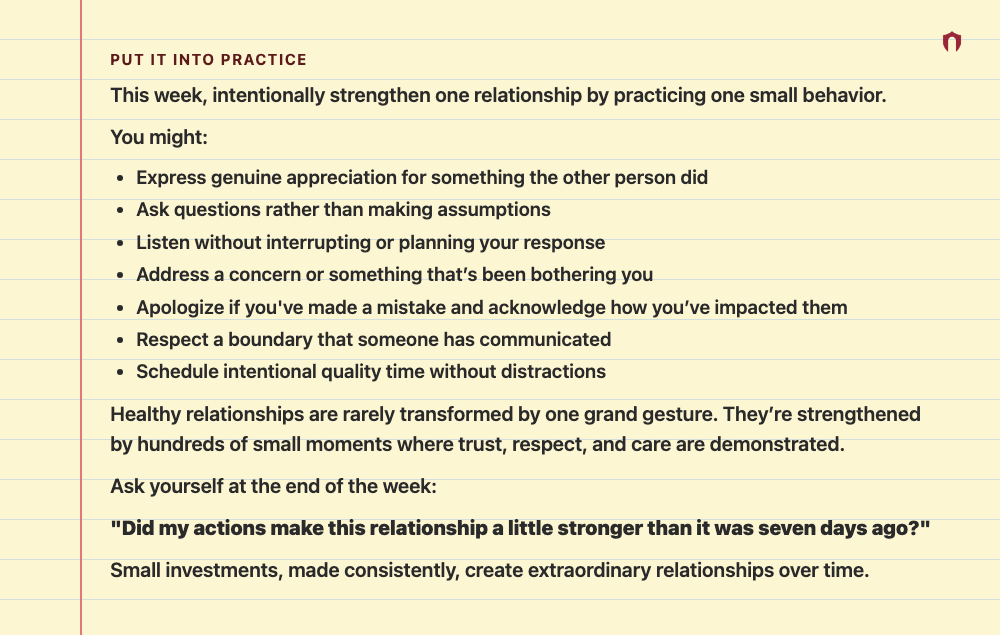
Healthy relationships are not built through grand romantic gestures but through countless small interactions repeated consistently over time. Showing appreciation, listening attentively, apologizing when appropriate, keeping promises, expressing affection, and supporting one another during difficult moments all contribute to lasting trust.
A healthy, successful relationship isn't one thing. It's a million little things.
Perhaps the most important lesson is that healthy relationships begin with healthy individuals. Developing self-awareness, emotional regulation, confidence, communication skills, and healthy boundaries not only improves personal well-being but also creates the foundation for stronger and more fulfilling relationships.
No relationship is perfect, and every couple experiences challenges. However, when two people are committed to honesty, respect, growth, and working together through difficulties, relationships can become one of the greatest sources of support, meaning, and fulfillment throughout life.
🧠 Your Mental Playbook
One Thing to Remember
Healthy relationships aren't found, they're built.
While chemistry and compatibility can bring two people together, lasting relationships are created through trust, communication, respect, accountability, and consistent effort over time. The strongest relationships aren't those without challenges, they're the ones where both people continually choose to work through those challenges together.
Reflect
Take a moment to think about your closest relationships - whether romantic, friendships, or family.
Ask yourself:
Which qualities of a healthy relationship are already present?
Which qualities could be strengthened?
How do you typically respond during conflict - with curiosity and teamwork, or defensiveness and frustration?
Are you expecting someone else to provide your happiness, or are you bringing your own sense of fulfillment into the relationship?
Put It Into Practice
"The quality of your life is determined by the quality of your relationships." — Esther Perel
Why Breakups Hurt So Much
Research using brain imaging has shown that rejection and heartbreak activate areas involved in processing distress, including regions that are also active when people experience physical injuries.
This explains why heartbreak doesn't simply feel "sad." People often describe a tightness in their chest, a pit in their stomach, loss of appetite, fatigue, and nausea. Your brain interprets the loss of an important attachment figure as a significant threat, and signals distress to the body.
From an evolutionary perspective, this makes sense. Humans evolved as social creatures. Being separated from important relationships historically reduced chances of survival. As a result, our brains developed powerful systems designed to keep us close to people we depend on.
Heartbreak is not evidence that you're weak. It is evidence that your brain formed an attachment, and needs to process and adjust to the loss. In other words, your brain hasn’t determined that you’ll be okay yet, and is trying to keep you on guard until it does.
The Loss Is Bigger Than the Person
Models of managing grief and loss may apply when processing a breakup. But one of the biggest misconceptions about breakups is that you’re simply grieving the person you lost. In addition to that, the grief spans across multiple losses occurring simultaneously, such as:
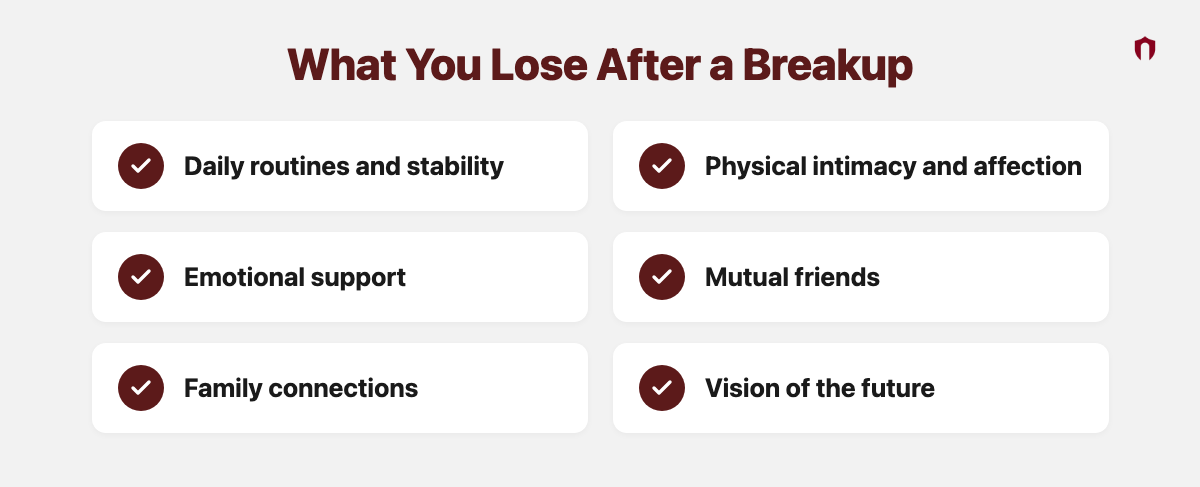
On a complicated but significant note, the breakup may represent the death of the future you imagined. You are forced to let go of the possibilities that never happened. Dealing with this kind of loss feels hollow, lonely, and hard to describe.
Why Your Brain Keeps Thinking About Your Ex
It can be frustrating to not be able to stop thinking about your former partner, even if you were the one that ultimately ended the relationship. This is completely normal, as your brain is designed to focus on and attempt to solve unfinished problems.
When a relationship ends, especially if it’s unexpectedly, it creates countless unanswered questions:
The brain continues searching for answers because uncertainty is psychologically uncomfortable. Unfortunately, rumination rarely produces clarity, and often creates more questions than it solves. It often keeps emotional wounds open and distracts from engaging in thoughts and actions that would help us move forward.
The goal of recovery is not having the answer to every question, it’s about learning to tolerate the disappointment and uncertainty.
The Chemistry of Heartbreak
Romantic love involves several powerful brain chemicals including:
Dopamine
Associated with pleasure, the reward system, and motivation. Being with someone you love often becomes one of your brain's strongest sources of dopamine. After a breakup, this reward system suddenly disappears, leaving a void in the typical source of happiness and a noticeable shortage of supply at first.
Many people experience symptoms similar to withdrawal, which is why after a breakup someone may be more likely to seek dopamine in other ways such as substances, sex, or other vices.
Oxytocin
Often called the "bonding hormone." Physical affection, trust, and intimacy strengthen emotional attachment. When that bond is suddenly removed, people often feel lonely even when surrounded by others, and could feel a sense of hopelessness and isolation that may persist while the brain adjusts to a new normal.
Stress Hormones
Following a breakup, cortisol often increases. Elevated stress hormones contribute to anxiety, difficulty sleeping, trouble concentrating, irritability, and fatigue. This helps explain why people often feel mentally and physically exhausted after heartbreak. As discussed in the Anxiety playbook, managing high levels of cortisol by exercising or talk therapy may help reduce the impact.
Grief Is Not Linear
People often expect recovery to move in a straight line. To feel a little bit better everyday until you’re over it.
Instead, healing tends to look more like waves. One week you may feel hopeful, but then a song, picture, or smell brings a memory back that is attached with intense sadness. It may feel like a setback, but it’s a completely natural part of moving on.
Check out the Grief and Loss Playbook for more information, but the short of it is when I have a client struggling with grief, we focus on three indications of whether we’re making progress. We look at whether the intense negative emotions are reducing in:
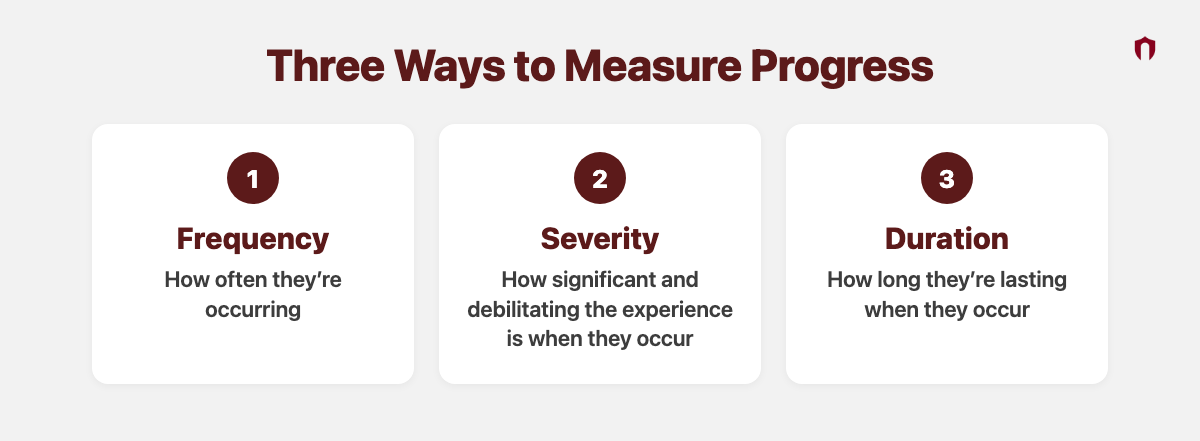
Like a stock, how you’re doing sometimes requires zooming out. You could have a bad day or even a bad week, but when we zoom out, are you generally trending in the right direction? If the answer is yes, then allow some space and time for bad days – it’s natural. If the answer is no, then certainly reach out for help and support as you navigate this difficult time.
Identity After a Breakup
Long-term relationships become integrated into our identity. People begin thinking in terms of "we" instead of "me." After a breakup, many people wonder, "Who am I without this relationship?"
Recovery often involves rebuilding an independent identity.
This might include:
One of the healthiest outcomes after heartbreak is becoming someone you genuinely enjoy spending time with. Developing an independent identity and being a person you’re proud of and confident in reduces the impact that breakups, rejection, embarrassment, etc. have on us.
Whether you’re currently single, in a relationship, or anywhere in between, it’s always the right time to invest in yourself, identify your strengths and interests, and live a fulfilling life on your own terms. A romantic relationship should complement that, but it should never replace your individuality.
The Trap of Idealizing an Ex
After a breakup, the brain often remembers the highlights while minimizing the difficulties. This is called selective memory. "They were perfect." "I'll never find someone like them." Or at a minimum we may downplay the issues in the relationship that led to the breakup in the first place, leaving us to wonder what happened, why, and whether we made a mistake.
A helpful exercise is writing three lists:
This gives reasonable credit to what was positive about the relationship while acknowledging the issues.
Closure: A Common Misunderstanding
You may believe that you won’t be able to heal until you receive closure from your former partner. Realistically, you may never get that answer you’re looking for, that perfect explanation, that acknowledgement of all you’ve done for them, or final well wishes.
The good news: you don’t need it. Closure, like forgiveness, comes from within.
That explanation, comment, or final goodbye is highly unlikely to have the positive impact you think it will. Sometimes the other person can’t explain their emotions to you, as they struggle to comprehend them themselves. Sometimes it’d simply open wounds that’ve been slowly healing. Sometimes it just wouldn’t change anything. Loss is loss, and regardless of the why of it, most of the time the answers we’re seeking won’t satisfy us to know.
Waiting indefinitely for perfect closure can delay recovery. Once again, healing isn’t about finding the answers – it’s about learning to live without them.
Warning Signs That Additional Support May Be Needed
Heartbreak is painful, but sometimes it develops into a more significant mental health concern.
Consider seeking support from a mental health professional if symptoms include:
Needing support is not a sign of failure. You’re not “losing the breakup.” You’re investing in the new version of you that deserves to be happy as you move forward.
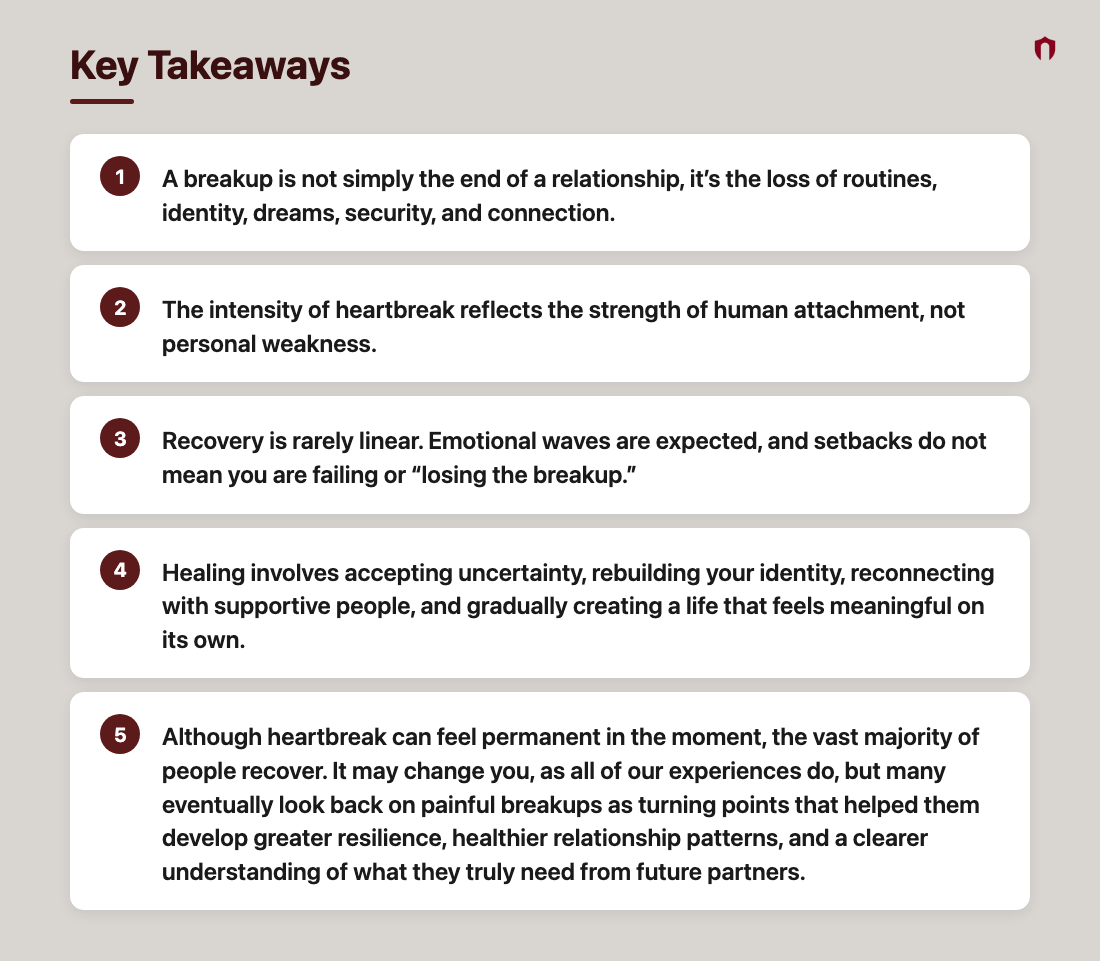
Key Takeaways
🧠 Your Mental Playbook
One Thing to Remember
You're not just grieving the person, you’re grieving the future you imagined with them.
One of the hardest parts of a breakup is that it ends more than a relationship. It often means letting go of routines, dreams, traditions, shared goals, emotional security, and a version of your future that felt real. Recognizing this can help explain why heartbreak feels so overwhelming. You're adjusting to multiple losses at once, and that both makes sense and takes time.
Reflect
Take a few moments to answer these questions honestly.
What am I grieving the most - the person, the companionship, the future I imagined, or something else?
Am I missing the relationship as it truly was, or the version of it I wish it had been?
What parts of my identity existed before this relationship that I'd like to reconnect with?
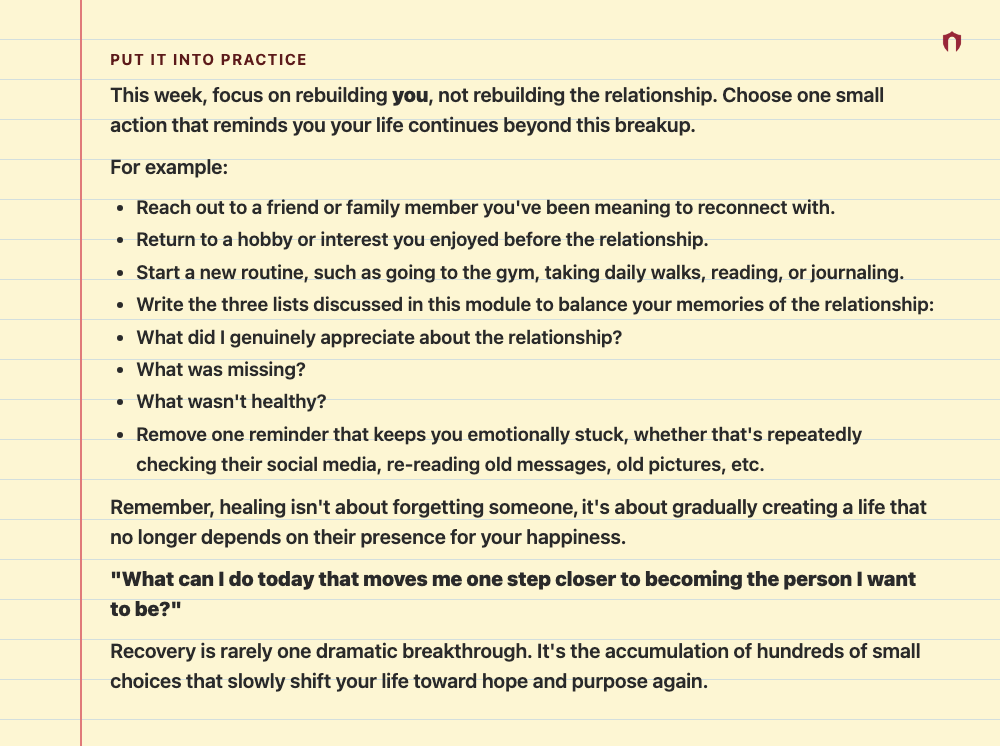
Put It Into Practice
"Sometimes good things fall apart so better things can fall together." — Unknown
Researchers generally describe four primary attachment styles: Secure, Anxious, Avoidant, and Fearful-Avoidant (Disorganized). Everyone possesses characteristics of each style to some degree, but most people tend to identify most strongly with one.
Secure Attachment
Individuals with a secure attachment style generally feel comfortable with both intimacy and independence. They are able to trust others without becoming overly dependent on them and are typically comfortable expressing their emotions, asking for support, and resolving conflict in healthy ways.
Securely attached individuals generally believe that they are worthy of love and that other people are trustworthy. Because of this, they are less likely to interpret minor relationship difficulties as signs that the relationship is ending. Since their perspective is typically healthy and based in reality, their actions tend to be positive for the relationship.
Strengths
People with secure attachment often:
These qualities often create emotional safety, making secure individuals easier to build long-term relationships with.
Relationship Outcomes
Secure attachment is associated with the highest levels of relationship satisfaction, trust, commitment, and emotional stability. Couples with both partners having secure attachment generally experience fewer destructive conflicts and recover from disagreements more effectively than couples with insecure attachment patterns.
Keep in mind the misconception that conflict is bad and disagreements mean something is wrong with the relationship. Securely attached couples aren’t immune to all relationship issues – they’re just more likely to deal with them quicker and more efficiently.
Anxious Attachment
Individuals with an anxious attachment style often crave emotional connection but have a persistent fear of losing the relationship. They frequently worry about being abandoned, rejected, or not being "good enough" for their partner.
Because relationships are often central to their sense of emotional security, anxious individuals may be highly sensitive to changes in communication, affection, or perceived emotional distance.
For example, a partner taking longer than usual to respond to a text message may trigger thoughts such as:
Although these fears feel very real, they are often driven more by attachment anxiety than by objective evidence.
Strengths
Individuals with anxious attachment often possess many positive qualities within relationships. They are frequently highly affectionate, deeply caring, loyal, and motivated to resolve conflict quickly.
Many who have an anxious attachment style become exceptional partners when they develop greater emotional security and self-confidence through therapy and working on themselves.
Potential Challenges
Because of their fear of abandonment, anxious individuals may unintentionally engage in behaviors that create strain within relationships.
Examples include:
Ironically, these behaviors can sometimes overwhelm partners, increasing emotional distance and reinforcing the anxious individual's fear of abandonment. Therefore, many people with anxious attachment have experienced loss of relationships in the past, which in turn confirms their worries and lead to repeat behaviors in future relationships.
Relationship Outcomes
Anxious attachment can contribute to cycles of insecurity and emotional exhaustion if left unaddressed.
Breakups may be especially painful because those with anxious attachment often experience not only the loss of the relationship but also a profound loss of emotional security. They may spend months replaying conversations, questioning what went wrong, or struggling to let go.
Fortunately, increasing self-esteem, developing emotional regulation skills, and learning to tolerate uncertainty can significantly reduce anxious attachment over time.
Avoidant Attachment
Avoidant attachment individuals struggle with one of the most fundamental and common modern-day human experiences: The fear of vulnerability.
They generally value independence and self-reliance to such an extent that intimacy may begin to feel uncomfortable. Rather than fearing abandonment, they are often more concerned about losing their independence or becoming emotionally vulnerable.
Many avoidantly attached individuals genuinely care about their partners but have learned through past experiences that relying on others is unsafe, and therefore a deep discomfort grows the closer the relationship becomes.
When relationships become emotionally intense, they may instinctively withdraw rather than move closer.
Strengths
Avoidantly attached individuals often demonstrate several strengths, such as:
These qualities can be valuable in many areas of life.
Potential Challenges
Because vulnerability feels uncomfortable, avoidant individuals may struggle to fully engage emotionally within relationships, and could exhibit some challenging traits:
Partners sometimes interpret this behavior as a lack of love or commitment, even when the avoidant individual deeply cares about the relationship.
Relationship Outcomes
Avoidant attachment can create emotional distance that leaves partners feeling lonely or disconnected. Breakups often occur because partners eventually feel emotionally neglected or believe they are constantly being kept at arm's length.
Therapy could help avoidantly attached clients to have a greater comfort with vulnerability and emotional connection.
Fearful-Avoidant (Disorganized) Attachment
Fearful-avoidant attachment combines characteristics of both anxious and avoidant attachment. Individuals with this style often deeply desire intimacy while simultaneously fearing it.
Part of them wants closeness, another part is scared of getting hurt. As a result, their partners may feel confused, and the relationship may be unpredictable, and emotionally intense.
This attachment style is often a result of a child growing up with inconsistent care from their parents, traumatic experiences in childhood, and relationships throughout life in which the person they depended on hurt them deeply.
Strengths
Despite the challenges associated with this attachment style, individuals often possess many strengths. They are frequently:
Potential Challenges
Fearful-avoidant attachment often produces internal conflict. Individuals may:
Relationship Outcomes
Relationships involving fearful-avoidant attachment may become emotionally volatile and at times dangerous when partners are unable to understand and address the underlying attachment dynamics.
The internal conflict often leads to repeated cycles of reconnecting and distancing. Breakups can be especially difficult as those with fearful attachment may have deep emotional wounds triggered by the ending of the relationship while simultaneously craving reconciliation.
Can Attachment Styles Change?
One of the biggest misconceptions about attachment theory is that attachment styles are fixed for life. Research suggests this is not true. Attachment patterns are learned, and learned patterns and beliefs can change.
People often become more secure through:
The goal is not to become a "perfect" partner but to become increasingly secure in how we relate to ourselves and others.
Understanding Attachment in Relationships
Attachment styles do not determine whether a relationship will succeed or fail. They influence how individuals respond to closeness, conflict, vulnerability, and emotional stress.
For example:
Final Thoughts
Attachment styles help explain many of the recurring patterns people experience in relationships, but they do not define who we are or determine our future. Healthy relationships are built through self-awareness, communication, emotional regulation, trust, and a willingness to grow.
Perhaps the most encouraging finding from attachment research is that emotional security is something that can be developed. Regardless of where someone begins, increasing self-awareness and practicing healthier relationship skills can lead to stronger, more satisfying, and more secure relationships throughout life.
🧠 Your Mental Playbook
One Thing to Remember
Your attachment style explains your relationship patterns, it doesn't excuse them, and it doesn't define you.
Attachment styles are learned ways of relating to other people. They help explain why certain situations trigger fear, anxiety, distance, or emotional intensity, but they are not permanent personality traits. The goal isn't to label yourself, it’s to become aware of your patterns so you can choose healthier responses instead of repeating old ones.
Reflect
Take a moment to think about your closest relationships.
Ask yourself:
Which attachment style do I identify with most?
How has this pattern helped and/or hurt me in relationships?
When I feel threatened in a relationship, do I tend to pursue or withdraw?
How do my insecurities negatively impact others?
If I became just a little more secure in my relationships, what would I do differently?
Remember, awareness isn't about blaming yourself or your past. It's about giving yourself the opportunity to grow.
Put It Into Practice
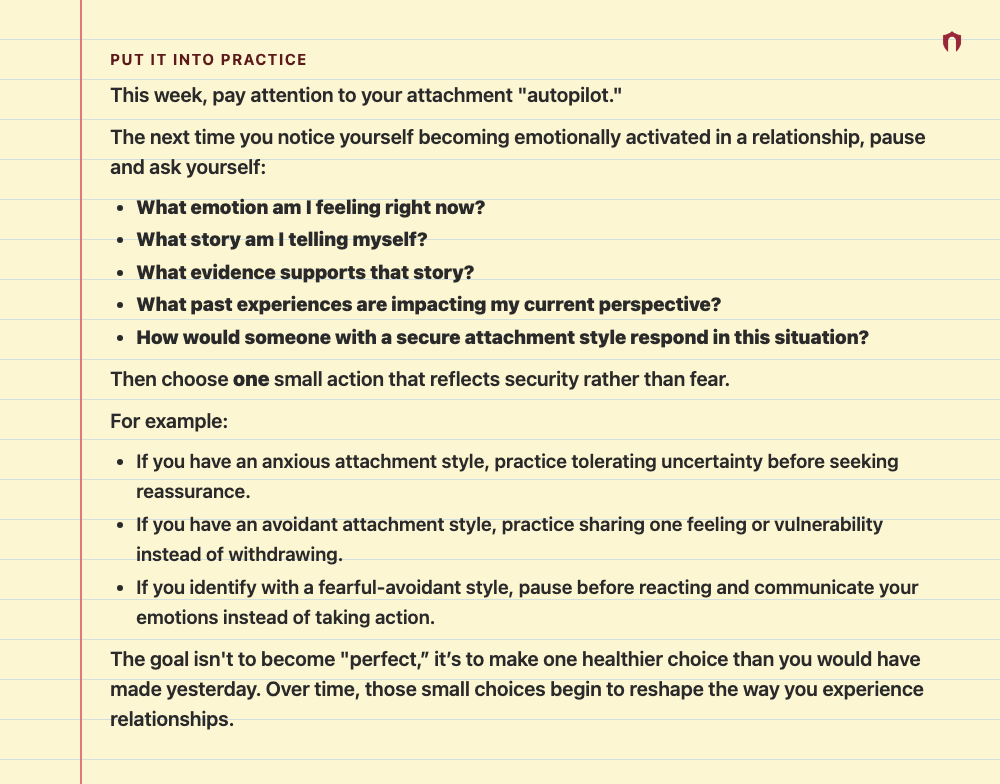
"Between stimulus and response there is a space. In that space is our power to choose our response." — Viktor E. Frankl
Healing Isn't About Forgetting
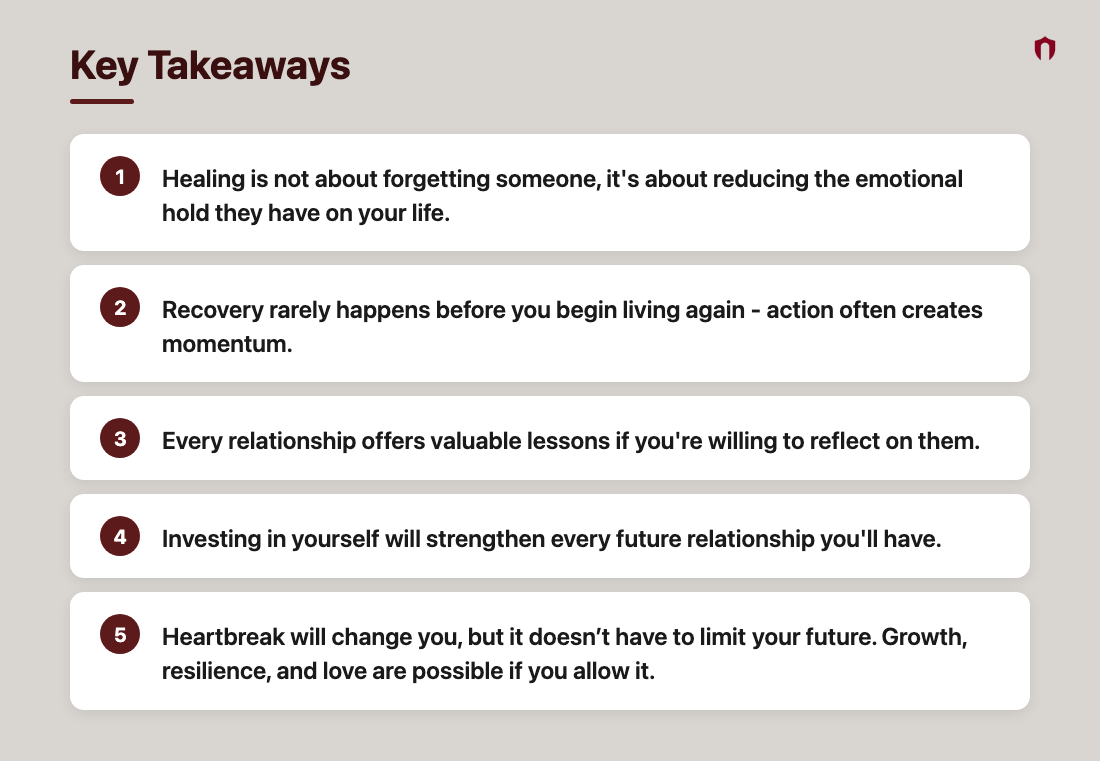
One of the biggest misconceptions about moving on is that you should eventually stop thinking about your former partner altogether. Realistically, life doesn’t really work like that. We don’t live long enough to forget. The people who have mattered most to us often remain part of our story.
Healing doesn't mean pretending the relationship never happened, it means the memories no longer control your emotions, decisions, or future. Over time, thoughts that once brought overwhelming sadness often become memories that simply remind you of a chapter in your life.
While you may never forget, you can process and work through pain in a way that leads to peace.
Stop Waiting to Feel Better Before Living Again
After a breakup, many people put their lives on hold.
"I'll travel once I feel better." "I'll start dating again once I'm completely over them."
"I'll get back to the gym when I'm motivated."
"I'll be happy again once the pain goes away."
Unfortunately, healing rarely works this way. In what is a central theme of the Mental Fitness Lounge, waiting for the motivation before doing the action is the wrong approach. In reality, action creates motivation, and gets you back to feeling like yourself quicker and more effectively than “giving it time.”
You don't need to wait until all the sadness disappears before reconnecting with friends, pursuing goals, exercising, traveling, or trying new experiences. Life is moving forward now, and there’s no need to miss out on it.
Every Relationship Teaches You Something
It can be tempting to view a breakup as a failed relationship, but every relationship teaches us something about ourselves.
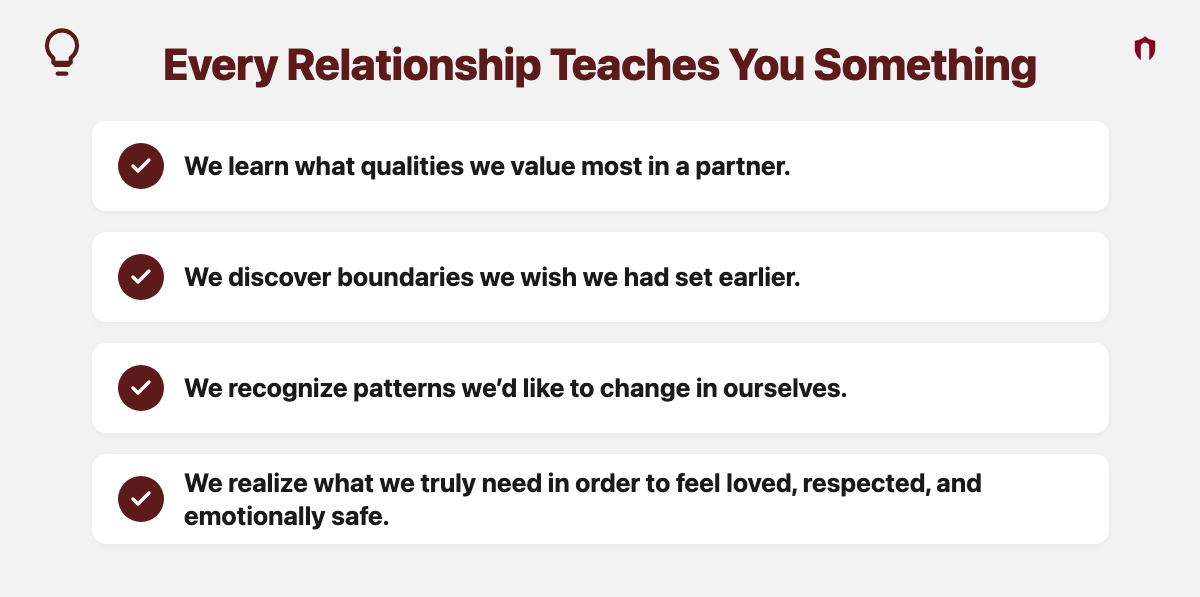
The right question to ask after a breakup is: "What can this experience teach me?"
Pain doesn't automatically produce growth, reflection and appropriate adjustments afterwards are what lead to development over time.
Don't Let One Relationship Become Your Identity
One of the greatest risks after heartbreak is allowing the breakup to define who you are. People sometimes begin describing themselves as:
"The one who got cheated on."
"The divorced person."
"The one nobody stays with."
"The person who's impossible to love."
These identities become incredibly powerful because the stories we tell ourselves shape how we see the world.
But a breakup is a highly subjective, complicated thing that happened. It’s not who you are. You are, and always have been, more than just one relationship. And honestly, if your primary identity was tied to another person, that was going to be problematic anyway.
The healthiest people stop organizing their identity around what they lost and begin building it around who they are becoming.
Invest in the Relationship You'll Have Forever
Romantic relationships may come and go, friendships change, careers evolve, children grow up.
Life constantly changes. But there is one relationship that lasts from the day you are born until the day you die - the relationship you have with yourself.
Investing in yourself isn't selfish, it’s completely logical, and one of the greatest gifts you can give every future relationship you'll ever have.
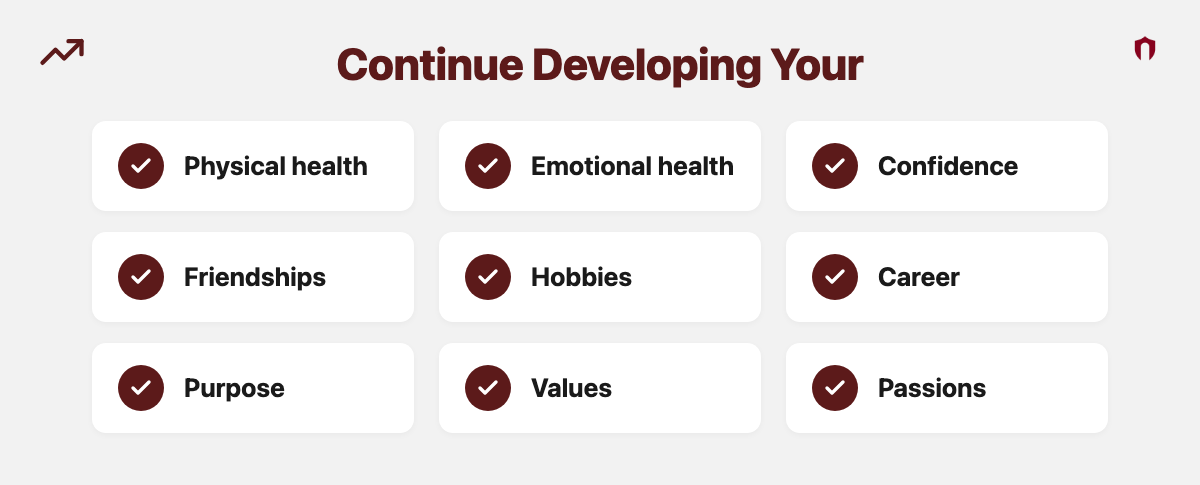
A romantic relationship should complement your life, it should never become your entire life.
Loving Again
One of the most common fears after heartbreak is: "What if this happens again?" The truth is that every meaningful relationship involves vulnerability. You give the keys to your heart to someone and trust them not to break it. Without that vulnerability, the relationship would lack meaning and purpose.
There is no way to guarantee you will never experience another broken heart, but that's not the goal. The goal is to become resilient enough that the possibility of heartbreak no longer prevents you from experiencing love.
The healthiest people aren't fearless, they simply understand that the rewards of meaningful connection are worth the risks that come with vulnerability.
As Michael Scott famously said, “No question about it, I’m ready to be hurt again!”
Your Story Isn't Over
One painful chapter does not determine how the rest of your story unfolds. Many eventually look back on the breakup they once thought would ruin their life as the experience that changed it for the better. Not because the pain wasn't real, but because it forced them to grow in ways they never would have otherwise.
One day, you'll notice that you went weeks without thinking about them. That you made plans for the future again. That your confidence returned. That you found peace.
Healing rarely arrives all at once. It quietly accumulates through hundreds of ordinary days in which you continue choosing to move forward.
And one day, almost without realizing it, you discover that you're no longer surviving. You're living again.
Key Takeaways
🧠 Your Mental Playbook
One Thing to Remember
Don't let one chapter ending convince you the story is over.
Every relationship, whether it lasts six months or sixty years, becomes one chapter in your life story. Some chapters are joyful, others are painful, but none of them define the entire book. Every day you have the opportunity to begin writing the next chapter.
Reflect
Take a moment to think about your journey. Ask yourself:
What has this relationship taught me about myself?
What strengths have I developed because of what I've been through?
What is one area of my own life I'd like to continue investing in, regardless of my relationship status?
Growth begins when we stop focusing on what we've lost and start appreciating who we're becoming.
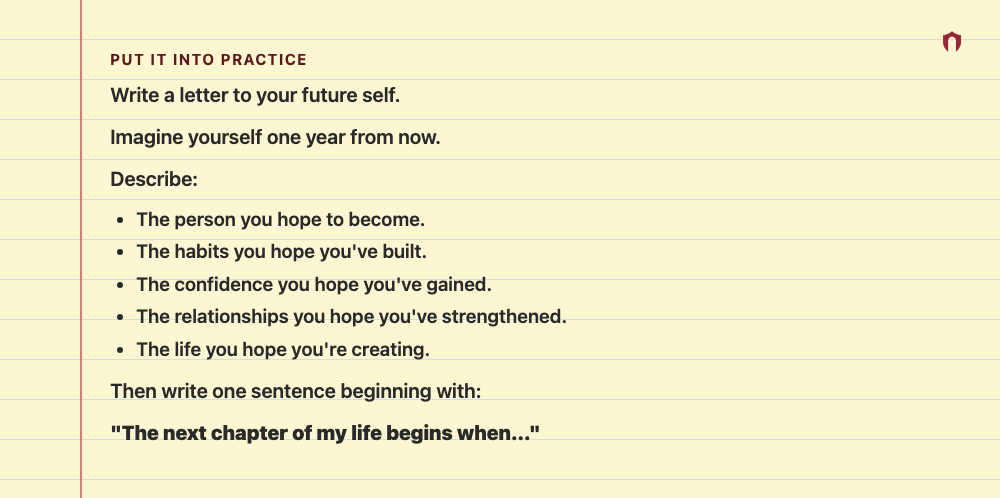
Put It Into Practice
"Rock bottom became the solid foundation on which I rebuilt my life." — J.K. Rowling
Work one-on-one with Zack to build a plan tailored to your situation.