
Learn how ADHD actually works — and discover tools that fit the way your brain is wired.
A personal welcome and overview of this playbook from Zack.
Attention-Deficit/Hyperactivity Disorder (ADHD) is a neurodevelopmental disorder that affects how the brain regulates attention, impulse control, and executive functioning. ADHD is often associated with children who are highly energetic or easily distracted, but it’s also a lifelong condition that can affect people of all ages. Many adolescents and adults continue to experience symptoms as they grow up that can impact school, work, relationships, and everyday tasks.
Even though the name of the disorder is “attention deficit,” ADHD is not simply a problem with paying attention. It’s more of an issue with regulating attention. People with ADHD often have the ability to focus very well on activities they find highly interesting or rewarding. However, they may struggle to direct and sustain attention on tasks that are repetitive, less stimulating, or require more prolonged mental effort (such as sitting in class).
Diagnostic Criteria
Mental health professionals diagnose ADHD using criteria outlined in the Diagnostic and Statistical Manual of Mental Disorders (DSM-5-TR). Symptoms are divided into two primary categories: inattention and hyperactivity/impulsivity. Individuals may present primarily with inattentive symptoms, primarily with hyperactive-impulsive symptoms, or a combination of both.
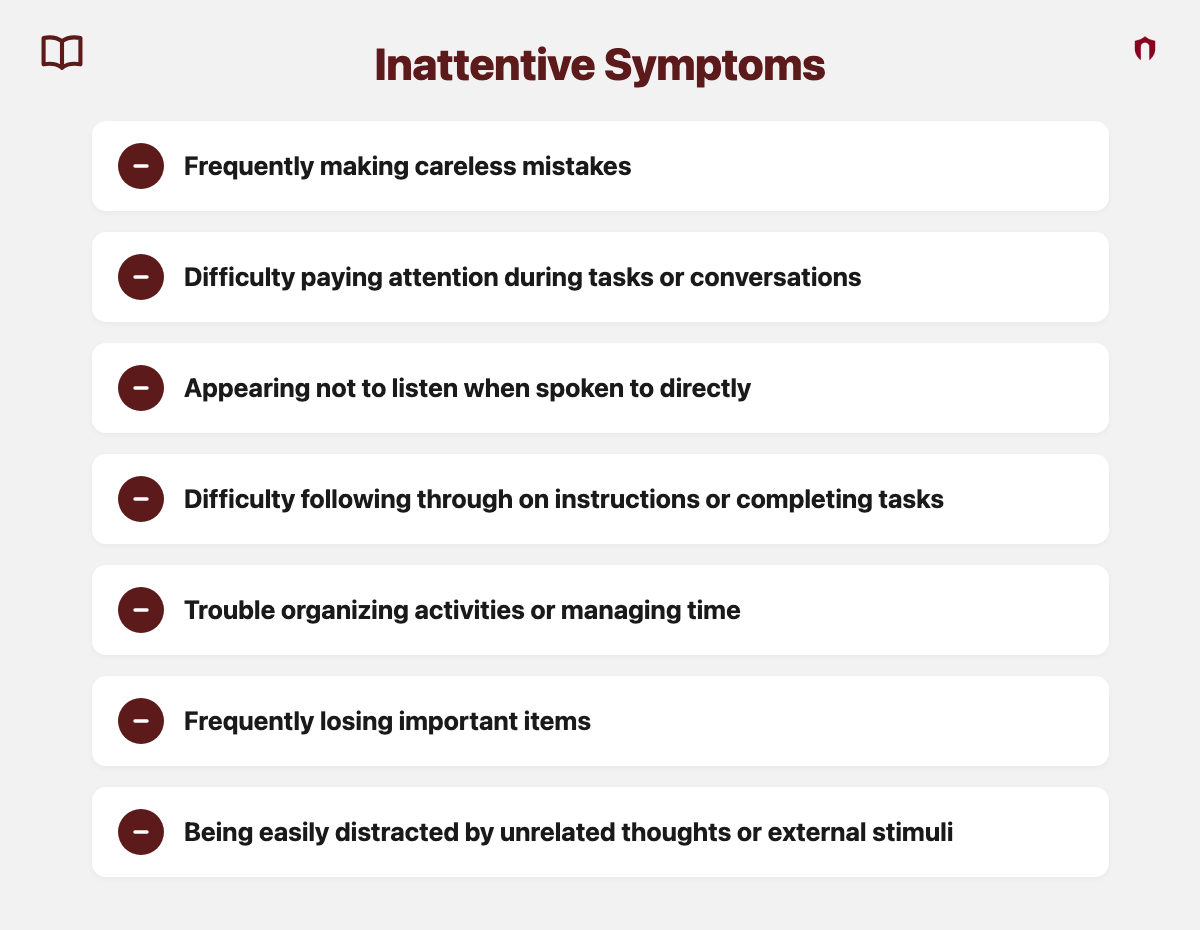
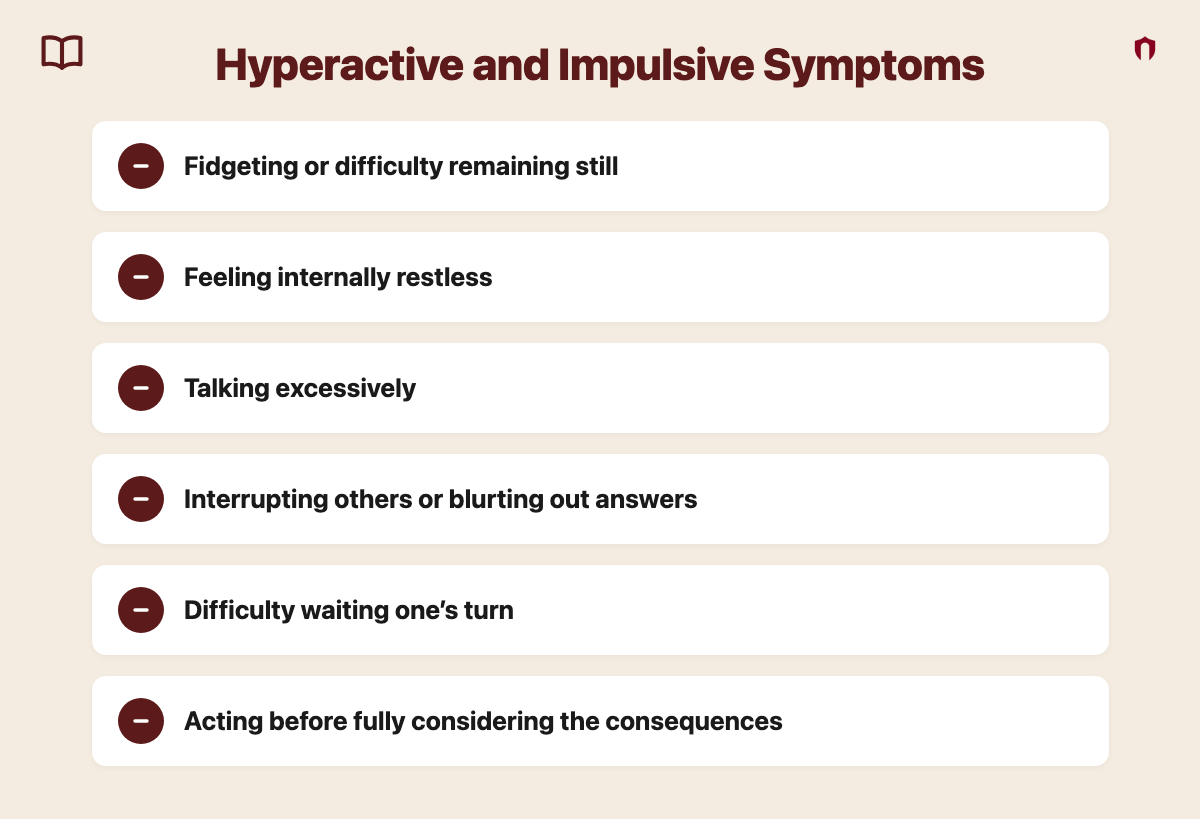
Here’s where a common misconception comes into play: For a diagnosis, several symptoms must have been present before the age of 12, occur in two or more settings (such as home, school, or work), persist for at least six months, and cause meaningful impairment in daily functioning. Note that ADHD is not diagnosed simply because someone occasionally becomes distracted or forgetful. Dividing our attention between scrolling reels, texting, a show we’re watching, making dinner, and thinking about tasks for tomorrow is not a deficit of attention, it’s an issue with us draining the available resource of attention that we have.
Typical Course and Development
ADHD begins during childhood, although many individuals are not diagnosed until adolescence or adulthood. Children with more obvious hyperactive symptoms are usually identified earlier because their behaviors are more noticeable. In contrast, individuals with predominantly inattentive symptoms may go undiagnosed for years because they are often viewed as quiet, daydreamy, disorganized, or simply "not living up to their potential."
As people grow older, hyperactivity often becomes less physically noticeable. Rather than constantly running or climbing, adults may experience an internal sense of restlessness or difficulty relaxing. Difficulties with organization, planning, procrastination, attention, and time management often become more prominent as academic, occupational, and personal responsibilities increase.
Common Challenges Associated with ADHD
ADHD affects more than attention. Because it impacts executive functioning (the brain's ability to organize, prioritize, initiate, and regulate behavior) it can influence every area of daily life.
Individuals with ADHD often struggle with starting and finishing tasks, managing time, organizing their environment, remembering appointments, and keeping track of personal belongings. They may frequently underestimate how long tasks will take or become overwhelmed by responsibilities that seem manageable to others.
ADHD can also create difficulty with regulating emotions. Frustration may build quickly, criticism can feel especially hurtful, and emotional reactions may be more intense or harder to manage. Some also report difficulty shifting attention between tasks, making decisions, or maintaining consistent motivation.
In adults, ADHD often has a negative impact on relationships. Forgetting important dates, interrupting conversations, appearing distracted, or struggling to follow through on commitments may create conflict with family members, friends, or coworkers. These challenges are not typically the result of a lack of caring but rather reflect underlying difficulties with attention and executive functioning.
Strengths Associated with ADHD
Although ADHD presents real challenges, it can also be associated with valuable strengths. Many individuals with ADHD are creative, curious, energetic, adaptable, and capable of thinking outside the box. They often perform exceptionally well in fast-paced environments, enjoy solving problems, and may demonstrate remarkable persistence when engaged in work they find personally meaningful.
Recognizing these strengths does not minimize the difficulties associated with ADHD, but it provides a more balanced understanding of the condition. Successful management often involves learning how to reduce the impact of symptoms while building upon natural talents and interests.
Hope and Treatment
ADHD is a lifelong condition, but it is highly manageable. Many individuals benefit from a combination of medication, psychotherapy, ADHD coaching, organizational strategies, lifestyle modifications, and environmental supports. Becoming self-aware about how ADHD affects your thinking and behavior is often the first step toward developing effective systems for success.
With appropriate treatment and self-understanding, people with ADHD can thrive academically, professionally, and personally. The goal of treatment is not to change who someone is, but to reduce the barriers that prevent them from reaching their full potential.
Many with ADHD spend years believing they're lazy, undisciplined, or simply "not trying hard enough." In reality, ADHD is not a character flaw, it's a difference in how the brain manages attention, motivation, and executive functioning. Understanding that distinction often replaces years of self-criticism with self-compassion and opens the door to more effective strategies for success.
🧠 Your Mental Playbook
One Thing to Remember
ADHD isn't a lack of attention, it's a challenge with regulating attention. Your brain isn't broken; it simply responds differently to motivation, interest, and stimulation.
Understanding that difference allows you to stop asking, "What's wrong with me?" and start asking, "How can I work with the way my brain functions?"
Reflect
Which ADHD symptoms have had the greatest impact on your life?
Have you ever mistaken your ADHD symptoms for laziness, lack of intelligence, or a lack of effort?
When do you notice yourself focusing exceptionally well? What do those situations have in common?
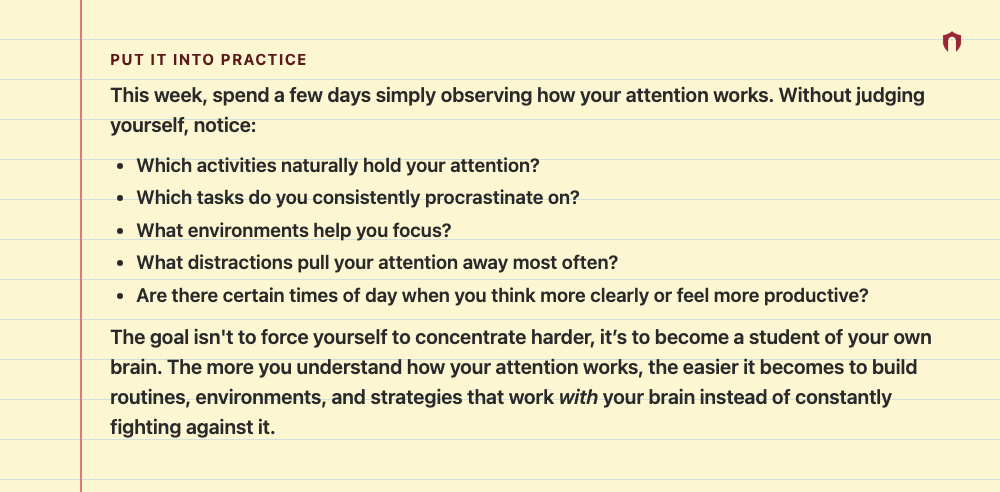
Put It Into Practice
"Knowing yourself is the beginning of all wisdom." — Aristotle
What Is Executive Functioning?
Think of executive functioning as the brain's Chief Executive Officer (CEO). It functions as a group of mental processes that help us direct our behavior toward goals and accomplish what we set out to. Just as the CEO of a company coordinates different departments to keep everything running smoothly, executive functioning coordinates different mental processes so we can successfully navigate everyday life.
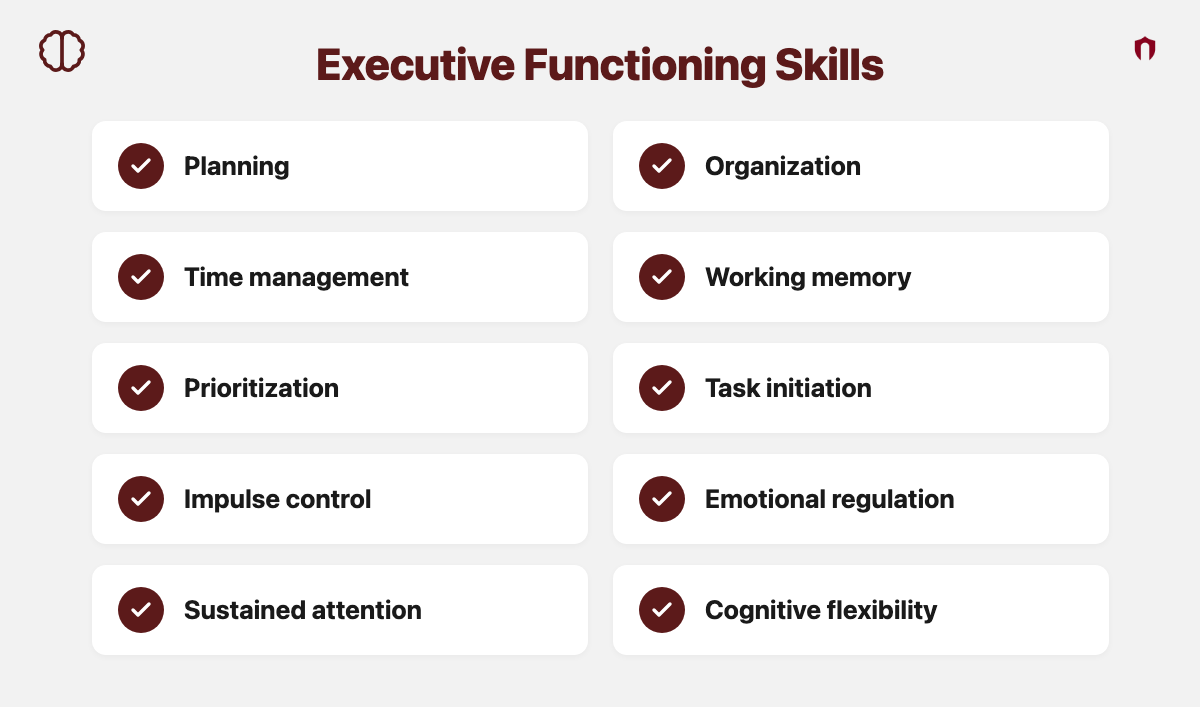
When executive functioning is working well, these processes happen almost automatically. When it’s impaired (as is typically the case with ADHD), even simple daily responsibilities can feel overwhelming.
ADHD Is a Disorder of Performance, Not Knowledge
One of the most frustrating parts of ADHD is that people often know exactly what they should be doing. They know they need to pay the bills, start the assignment, clean the house, answer the email, or leave the house on time.
The problem isn't knowledge, it's execution.
Many people with ADHD describe feeling like they have all the information they need but struggle to consistently translate that knowledge into action.
This is one reason why comments such as:
"You just need to try harder."
"Just get organized."
"Just focus."
can feel so frustrating. If simply trying harder solved ADHD, people with ADHD would have solved it years ago.
Working Memory: The Brain's Mental Sticky Note
Working memory is the ability to temporarily hold and use information in your mind while completing a task. Think about when you’re trying to remember:
People with ADHD often describe their working memory as if their mental sticky notes keep falling off. This isn't because they're unintelligent, it's because their brain has greater difficulty keeping information actively available while simultaneously processing other information.
This is why reminders, calendars, written lists, and other consistent systems are often so effective. They reduce the responsibility of working memory.
Task Initiation: Knowing Isn't the Same as Starting
One of the least understood symptoms of ADHD is the difficulty people have getting started on tasks. In class and at home, teachers and parents may get frustrated with a child for procrastinating due to the belief that it reflects laziness.
With ADHD, procrastination is often an executive functioning problem, not a motivation problem. People frequently describe staring at a task they genuinely want to complete while feeling unable to begin. This experience can be incredibly confusing and frustrating. It often leads to guilt, shame, and self-criticism.
In these instances, people with ADHD may only start a task when the deadline becomes urgent enough to activate their attention.
Time Blindness
Many people with ADHD experience something known as time blindness. This doesn't mean they can’t tell time, it means they have difficulty accurately sensing the passage of time or estimating how long tasks will take.
As a result, they may:
For many people with ADHD, time is experienced as either:
Now or Not Now.
This is why external reminders, calendars, timers, and visual schedules are often far more effective than relying on memory alone.
Emotional Regulation
An underdiscussed aspect of ADHD is that it also affects emotional regulation. Research has shown that individuals with ADHD may experience emotions more intensely and have greater difficulty regulating them once felt.
Small frustrations may feel overwhelming, criticism may feel deeply personal, waiting can become incredibly frustrating, and shifting away from disappointment may take longer. This isn't because people with ADHD are overly dramatic, it's because the same executive functioning systems that help regulate behavior also help regulate emotions.
Managing ADHD isn’t just about improving attention, it’s also about learning emotional regulation skills.
Why Motivation Feels Inconsistent
One of the biggest misconceptions about ADHD is that people can’t focus. In reality, many with ADHD can focus exceptionally well under the right circumstances. The challenge is that their attention is often driven less by importance and more by interest, novelty, or urgency.
A task that feels exciting may hold attention for hours, while a task that feels repetitive, even if it's extremely important, may feel almost impossible to begin.
This difference helps explain why someone with ADHD might spend three hours researching a new hobby but struggle to answer one email.
This isn't a lack of caring, it's a difference in how motivation and attention are regulated.
Hyperfocus
One interesting feature (see, there are benefits!) of ADHD is something called hyperfocus. Hyperfocus refers to periods of intense concentration on activities that are highly engaging or rewarding.
During hyperfocus, individuals may become so absorbed in a task that they lose awareness of time, forget to eat, ignore phone calls, or miss appointments.
Hyperfocus can be a tremendous strength. It often contributes to creativity, innovation, deep learning, and exceptional performance. However, it can also become problematic if important responsibilities are unintentionally neglected, and social relationships are left unattended to.
Learning when hyperfocus is helping and when it's interfering is an important skill.
Building Systems Instead of Relying on Willpower
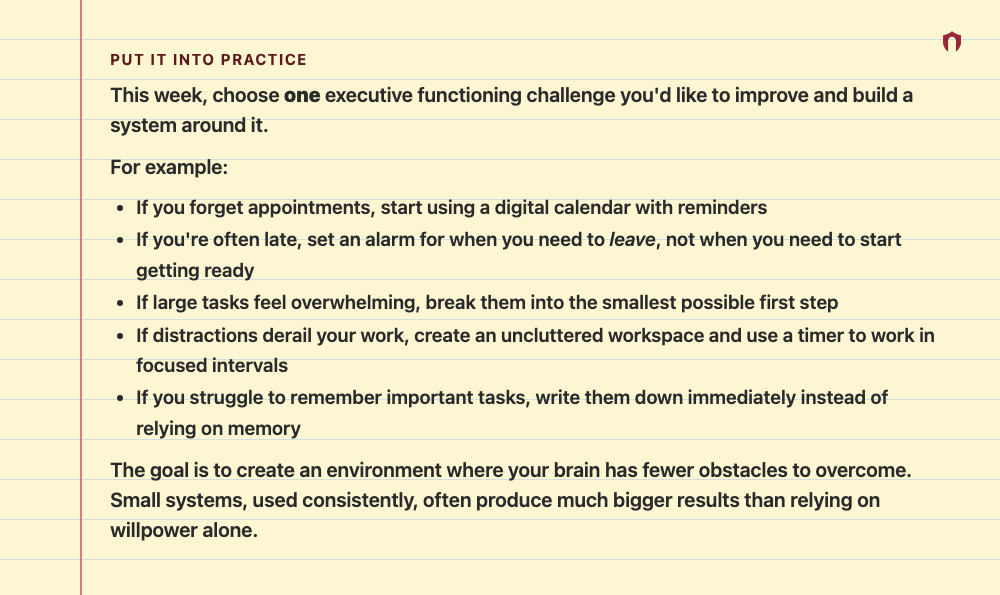
One of the biggest mistakes people make is trying to overcome ADHD by simply having better discipline and willpower. In reality, people with ADHD often succeed by relying less on memory and effort and more on effective systems that reduce the need for executive functioning.
Examples include calendars, planners, reminder apps, timers, visual schedules, breaking large tasks into smaller steps, minimizing distractions, and creating consistent routines.
Successful ADHD management isn't about trying harder, it's about creating environments that make success easier.
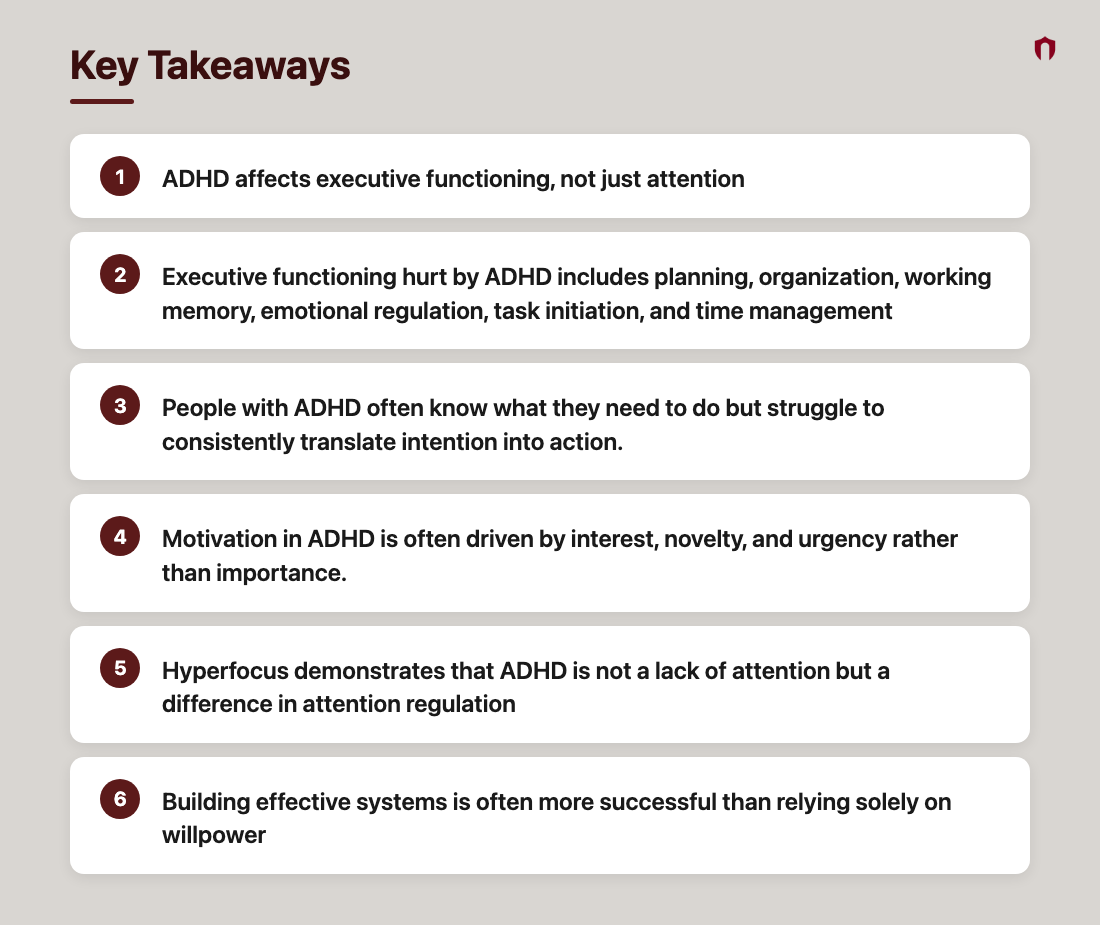
Key Takeaways
🧠 Your Mental Playbook
One Thing to Remember
Stop asking, "Why can't I do this?" Start asking, "What system would make this easier?"
ADHD is not a failure of character or effort. It's a difference in how your brain manages attention, motivation, and executive functioning. The goal isn't to rely on more willpower, it's to build systems that help your brain succeed.
Reflect
Which aspect of executive functioning challenges you the most - starting tasks, staying organized, managing time, regulating emotions, or something else?
When have you noticed yourself entering a state of hyperfocus? What kinds of activities trigger it?
Are there situations where you've blamed yourself for being "lazy" or "unmotivated" when executive functioning may have been the real challenge?
Put It Into Practice
"We do not rise to the level of our goals. We fall to the level of our systems." — James Clear
One System Cannot Fit Every Brain
Teachers and schools face an incredibly difficult task in 2026 and beyond. Teachers are responsible for educating dozens of students at once, meeting curriculum standards, preparing students for standardized testing, managing behavior, and trying to accommodate for different learning styles and needs.
The reality is that regardless of a teacher’s style or the values and effort of a school system, classroom expectations rely heavily on the very executive functioning skills that ADHD makes more difficult.
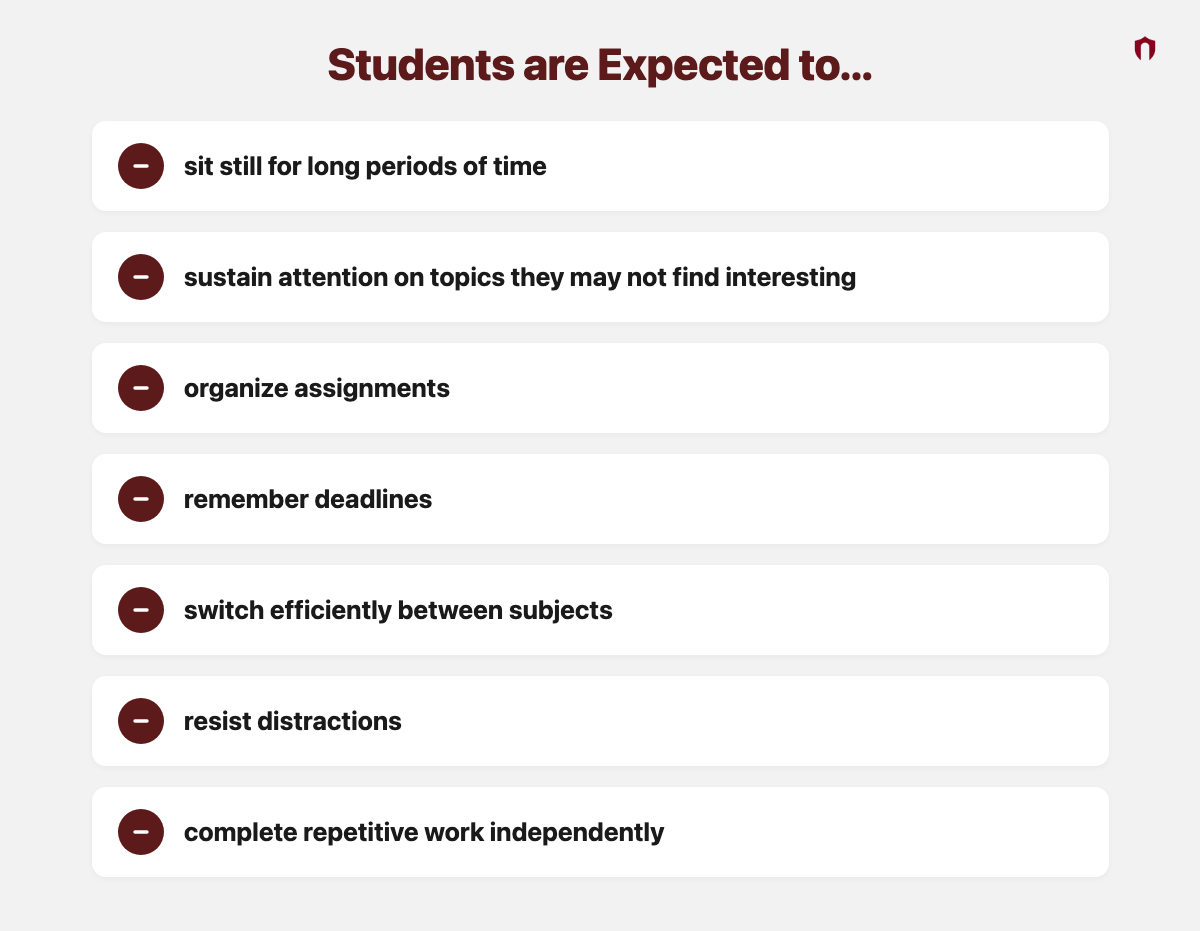
These are executive functioning tasks. For students with ADHD, these expectations can require substantially more mental effort than they do for their peers.
With rising rates of anxiety, ADHD, and more, it’s fair to pose the question of whether or not the current and historical education system is the right fit for today’s children.
Intelligence and Academic Performance Are Not the Same Thing
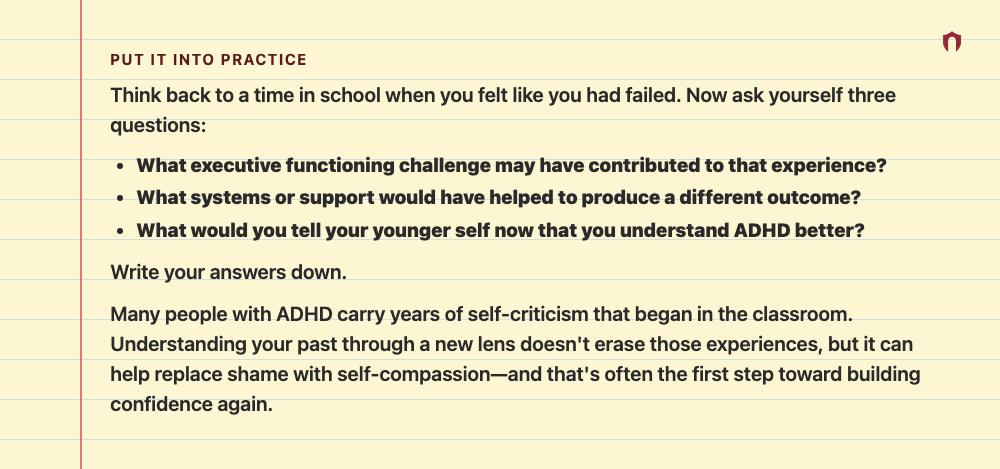
One of the biggest misconceptions about the current education system is that poor grades reflect low intelligence. There’s a long list of reasons why an intelligent student may not perform well in school, but sticking with ADHD – many get poor grades not because they lack knowledge, but because they struggle to demonstrate what they know in the formal ways that are required of them.
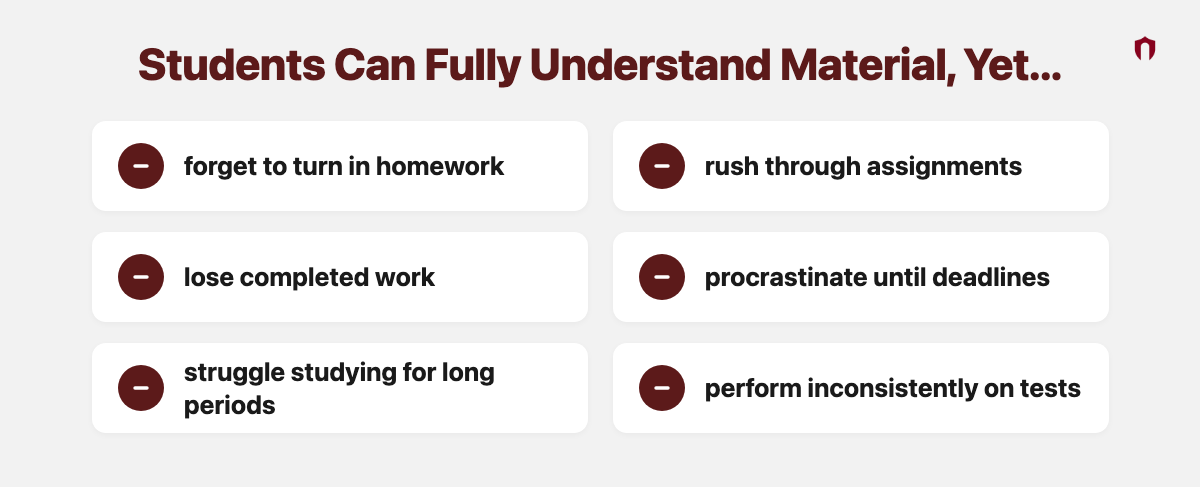
While this could be frustrating for teachers and parents, the student is almost definitely the most frustrated of them all. They know they’re capable of more, but can’t execute the skills necessary to perform.
The gap between potential and performance in the traditional education system continues to grow. Over time, this inconsistency can become one of the most discouraging aspects of living with ADHD.
"You're So Smart If You'd Just Apply Yourself"
Few phrases have affected people with ADHD more than "You're so smart, if you'd just apply yourself, you’d be great!"
Although usually intended as encouragement, many people experience it very differently.
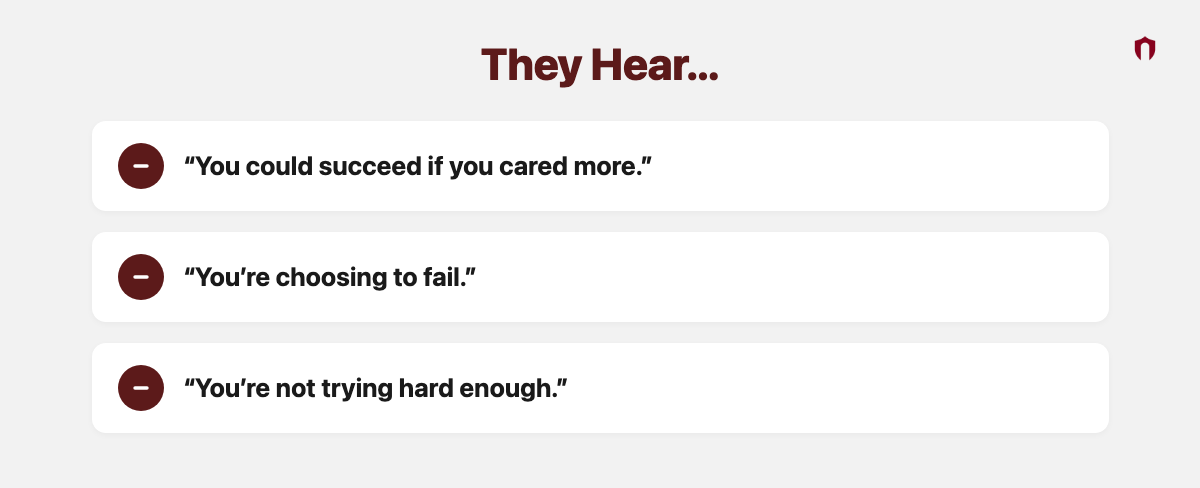
For someone with ADHD, this can be devastating. Many students are already trying harder than others realize – harder than their peers need to try to perform in an academic world that requires executive functioning.
When their effort isn't recognized, they often conclude that the problem must be who they are rather than how their brain works. Over time, repeated experiences like this can damage self-esteem far more than poor grades alone.
The Hidden Cost of Constant Comparison
School naturally encourages comparison. Grades, test scores, honor rolls, class rankings, standardized testing.
For students with ADHD, these comparisons can become painful. They may watch classmates complete assignments quickly while they struggle to get started. They may understand concepts easily but forget to submit the work, leading to “getting in trouble” at school and at home. They may perform exceptionally well one week and poorly the next, and the inconsistency often creates confusion for both students and adults.
The result is that many students begin comparing themselves not only academically but personally.
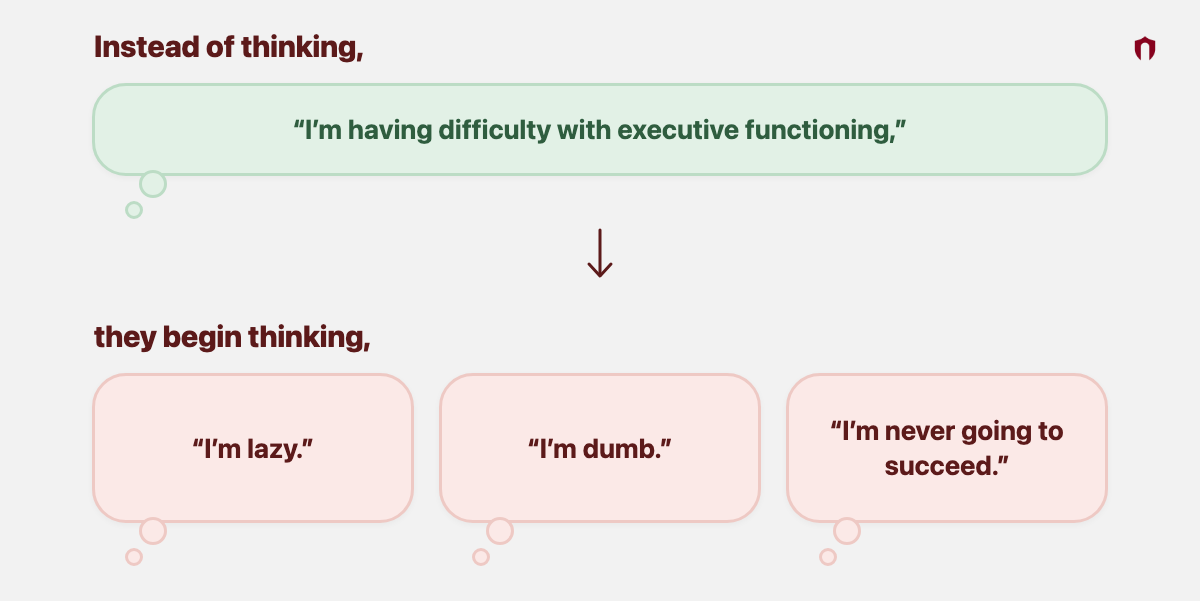
These conclusions are often far more damaging than the academic struggles themselves.
What Helps Students with ADHD Succeed?
Students with ADHD don’t necessarily need lower expectations, they need different supports and systems in place to accomplish their goals.
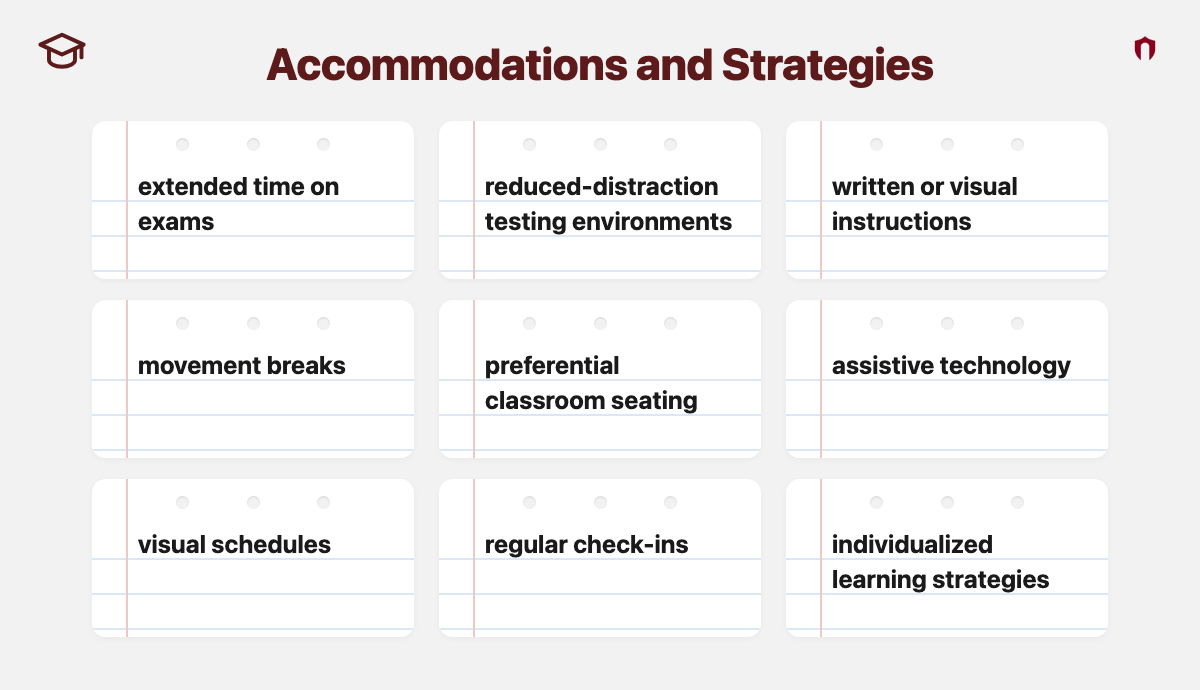
Outside the classroom, parents, teachers, and professional support can also help by focusing on encouragement, structure, and problem-solving rather than criticism.
The goal is not to remove challenges, it’s to remove unnecessary barriers so students have a fair opportunity to demonstrate what they know.
ADHD Doesn't End After Graduation
Although school is where many people first notice ADHD, executive functioning challenges don't disappear after graduation. As an adult, the issues may have similar manifestations but in “grown up settings.” They may struggle managing deadlines at work, miss a payment for a bill, struggle to schedule appointments, their house or room may be unorganized, and they may find maintaining relationships a difficult task.
As responsibilities increase, executive functioning becomes even more important. This is why many adults are first diagnosed after entering college, starting a career, or becoming parents – because they seek help after experiencing significant consequences of ADHD.
The environment changes, but the underlying executive functioning challenges remain.
A Different Way of Thinking About Success
Success should not be determined by how easily someone fits into the educational system.
Many highly successful entrepreneurs, artists, physicians, engineers, athletes, business leaders, and innovators have ADHD. What often separates them is not that their ADHD disappeared, it's that they eventually found environments, careers, and strategies that allowed their strengths to flourish while reducing the impact of their challenges.
School is one chapter of life. It is not the final verdict on your potential.
Key Takeaways
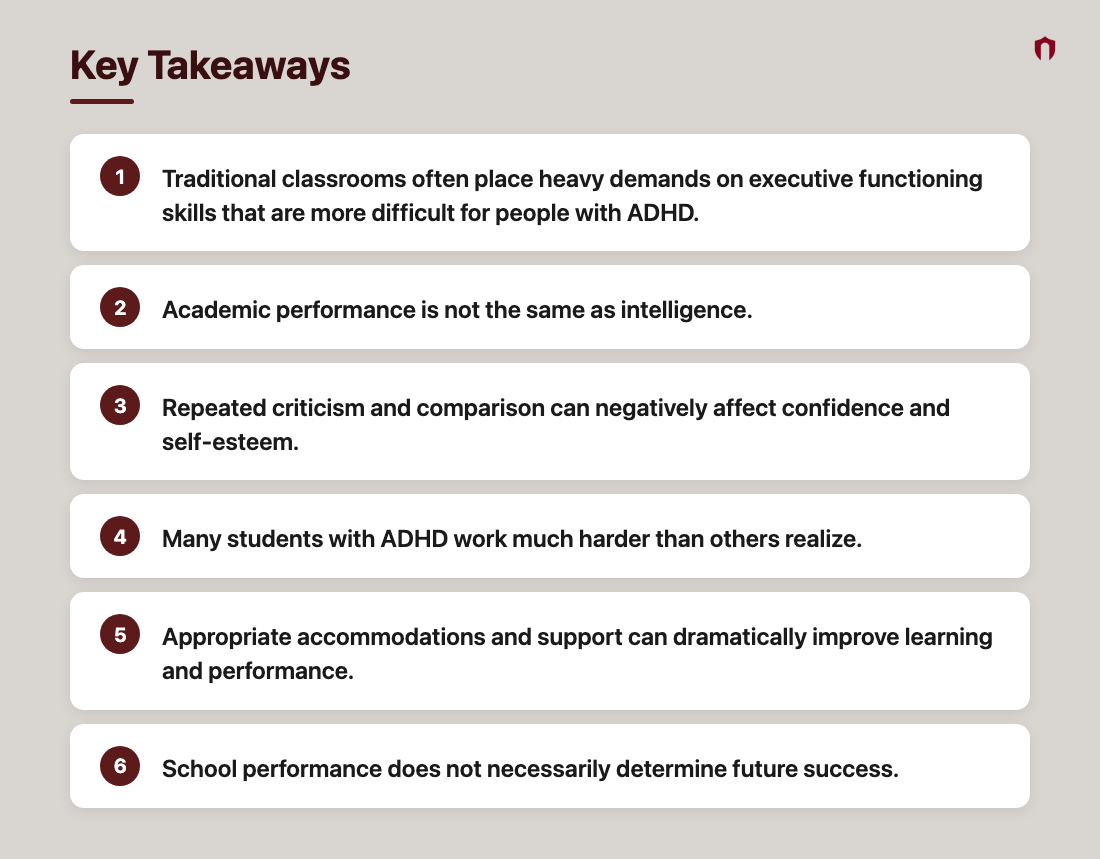
🧠 Your Mental Playbook
One Thing to Remember
Your report card measured how well you performed in school, not how intelligent, capable, or successful you could become.
Many people with ADHD grow up believing their grades define their potential. They don't. Your future is shaped far more by understanding how your brain works, developing effective systems, and finding environments where your strengths can thrive than by any test score or GPA.
Reflect
Looking back (or currently, if you’re an active student), what aspects of grades require you to utilize executive functioning that you struggle with?
Were there teachers, coaches, or mentors who recognized your strengths despite your struggles?
Have you ever confused academic performance with your own intelligence or worth?
Put It Into Practice
"Everyone is a genius. But if you judge a fish by its ability to climb a tree, it will live its whole life believing that it is stupid." — Unknown
Treatments Should be a Combination
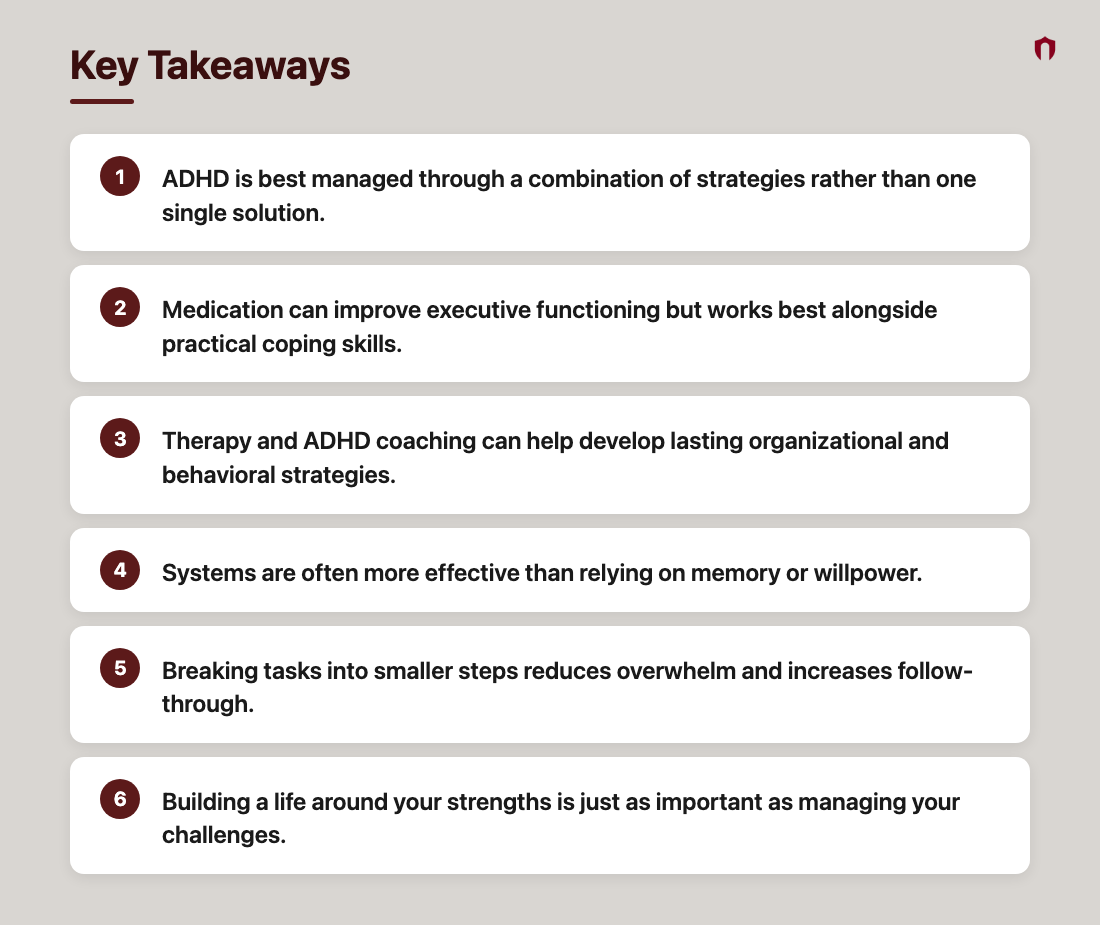
Like many mental health conditions, ADHD is often managed most effectively through a combination of approaches. Depending on the individual, treatment may include medication, therapy, organizational coaching, school or work accommodations, and social support.
No single strategy works for everyone. The goal is to build a personalized toolbox rather than searching for one perfect solution.
Medication
Medication is one of the most well-researched and effective treatments for ADHD. Medication can help improve attention, reduce impulsivity, strengthen working memory, and make it easier to regulate behavior.
The two primary categories of ADHD medication are:
Stimulants
Typically methylphenidate and amphetamine-based medications. Despite the name, stimulants often improve focus not by speeding up the brain’s functioning, but by increasing the availability of dopamine and norepinephrine in areas of the brain responsible for executive functioning.
For many people with ADHD, this leads to better concentration, organization, and task completion.
Non-Stimulants
Some people benefit more from non-stimulant medications, particularly if stimulants are medically inappropriate, or if there’s a history of substance use that makes prescribing stimulants ill-advised.
Medication is not a cure alone. It doesn’t teach organizational skills or eliminate ADHD. But those who take medication for ADHD report that it makes it easier to use the coping strategies, routines, and systems that lead to long-term success.
Medication decisions should always be made in consultation with a qualified medical provider.
Therapy and ADHD Coaching
Cognitive Behavioral Therapy (CBT) is one of the most researched psychological treatments for adults with ADHD. Therapy can help people better understand how ADHD affects their thoughts, emotions, relationships, and daily functioning.
CBT helps individuals:
Many with ADHD also benefit from ADHD/organizational coaching. Rather than focusing on emotional difficulties, coaching often emphasizes implementing practical skills and systems such as planning, accountability, prioritization, and building effective routines.
Build Systems, Not Willpower
Perhaps the single biggest shift people with ADHD can make is this:
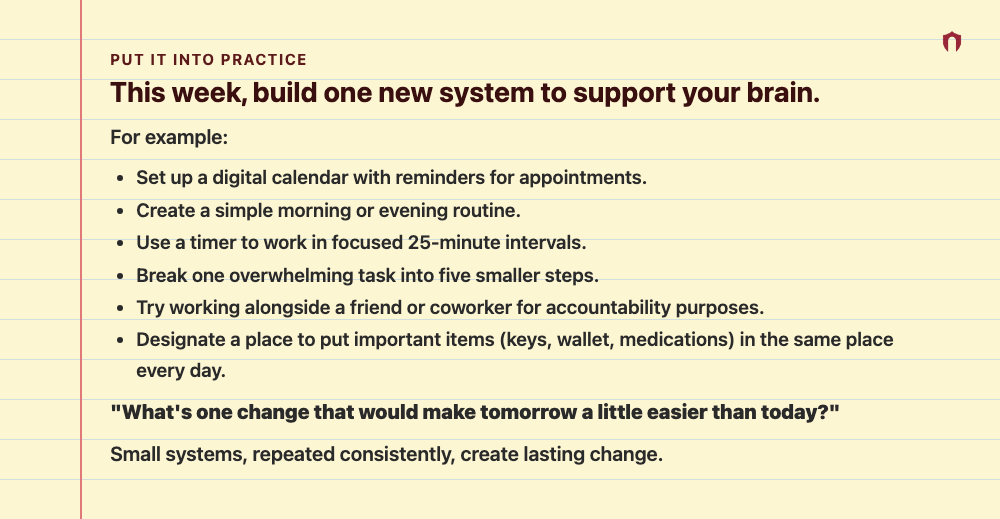
Stop relying on memory and start relying on systems.
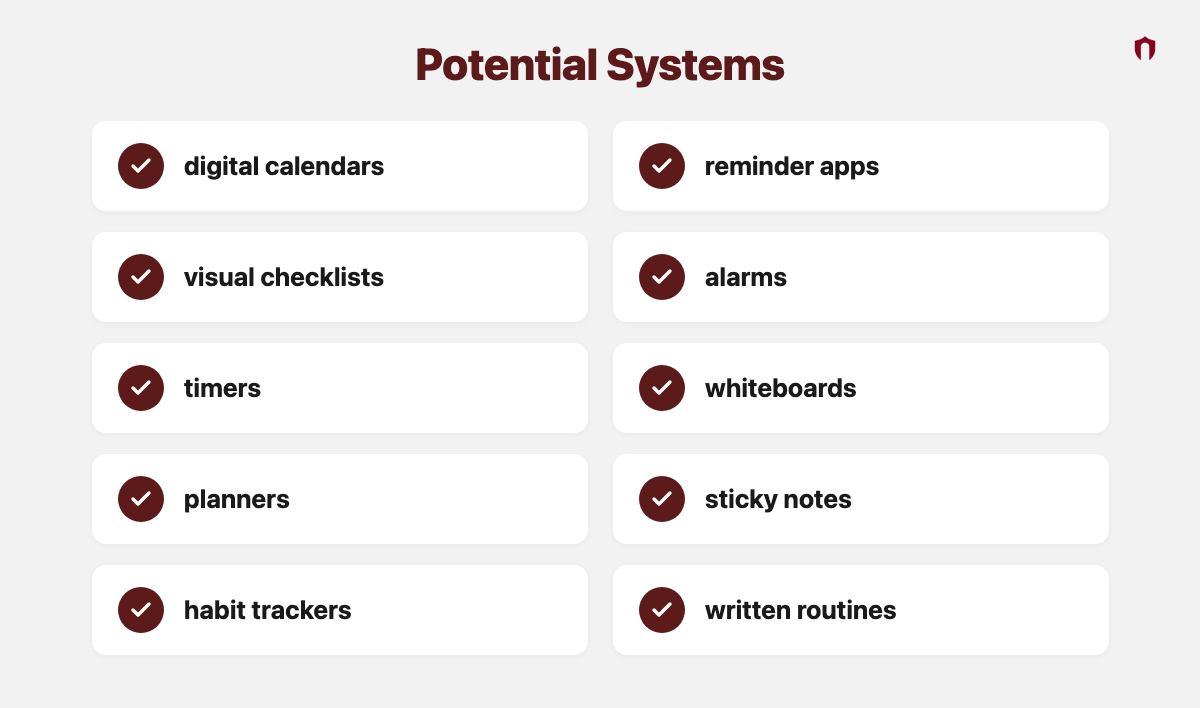
These systems reduce the burden placed on executive functioning. Instead of expecting your brain to remember everything, create an environment that remembers for you. Successful people with ADHD often don't have better memories, they have better systems.
Break Tasks Into Smaller Steps
Large projects often feel overwhelming because the brain struggles to identify where to begin.
Instead of the task being "Clean the house," break it into:
Instead of:
"Write the research paper," start with:
The smaller the first step, the easier it becomes to begin. Action creates momentum.
Reduce Friction
One of the best ways to improve follow-through is to make good habits easier and unwanted habits harder. For example, I recently made a daily goal to drink a certain amount of water. To reduce friction, I put my water bottle in front of me at my desk throughout the day. With it being in my line of vision and just requiring me to reach my hand out to drink it, I’m more likely to drink the water than I would be if I had to think about it, then get up to go get it from the kitchen.
Other examples include:
Small environmental changes often produce surprisingly large behavioral changes.
Use External Accountability
Many people with ADHD perform better when someone else knows what they're working on.
This might include an accountability partner/friend, an ADHD coach or therapist, a coworker, or simply surrounding yourself with others who are trying to be productive when you’re working.
This strategy sometimes provides external structure that helps people stay engaged and complete tasks.
Don't Chase Perfection
Many with ADHD alternate between two extremes. Either "I'll do everything perfectly," or “I won’t do it at all.”
Perfectionism often leads to procrastination because starting feels risky and overwhelming. Progress is always more valuable than perfection. Completing a project at 80% accuracy is far more valuable than trying to perfect something that never gets finished.
Play to Your Strengths
Managing ADHD isn't only about reducing weaknesses, it's also about building a life around your strengths.
Many people with ADHD thrive in environments that are fast-paced, creative, collaborative, often-changing, and intellectually stimulating. When possible, look for opportunities that allow your natural curiosity, creativity, energy, and problem-solving abilities to shine.
Success often comes not from changing who you are but from finding environments where your brain performs at its best.
Looking Ahead
ADHD is a lifelong condition, but it does not have to limit your future. The more you understand your brain, build effective systems, seek appropriate support, and learn from experience, the more confidence you'll develop in your ability to succeed.
Managing ADHD isn't about becoming someone without ADHD, it's about creating a life where ADHD no longer determines what's possible.
Key Takeaways
🧠 Your Mental Playbook
One Thing to Remember
Don't ask your brain to remember what your environment can remember for you. Build systems that make success easier.
People with ADHD often believe they need more discipline. More often, they need better systems. Calendars, reminders, routines, visual cues, and accountability aren't "crutches,” they're tools that allow your brain to do its best work.
Reflect
Which ADHD challenge causes the most stress in your daily life right now?
Are you relying more on memory and motivation or on systems and routines?
If you could improve just one area - organization, time management, procrastination, emotional regulation, or follow-through - which would have the biggest impact on your life?
Put It Into Practice
"You do not rise to the level of your goals. You fall to the level of your systems." — James Clear
Work one-on-one with Zack to build a plan tailored to how your ADHD actually shows up in your life.