
Understand depression, build coping skills, and explore paths toward feeling better.
A personal welcome and overview of this playbook from Zack.
Understanding Depression
Depression is more than simply feeling sad or having a bad day. Everyone experiences periods of sadness, disappointment, or grief in response to difficult life events. Depression, however, is a mental health condition characterized by a persistent low mood and/or a loss of interest or pleasure in activities that were once enjoyable. These symptoms last for an extended period of time and significantly interfere with a person's ability to function at work, school, in relationships, or in everyday life.
Similar to a physical illness such as cancer, Depression can occur at any age and affects individuals of all backgrounds. While depression can feel overwhelming, it is treatable, and many people experience significant improvement with appropriate care.
Diagnostic Criteria
I first want to address the issue that “Depression” is often a term that is misused. Struggling after a breakup, being sad after losing a loved one, or even experiencing symptoms of depression for a short period of time does not necessarily reach the criteria for a diagnosis. Mental health professionals use guidelines outlined in the Diagnostic and Statistical Manual of Mental Disorders (DSM-5-TR) to diagnose depression. To meet the criteria for a Major Depressive Episode, an individual must experience five or more of the following symptoms during the same two-week period, with at least one symptom being either depressed mood or a loss of interest or pleasure:
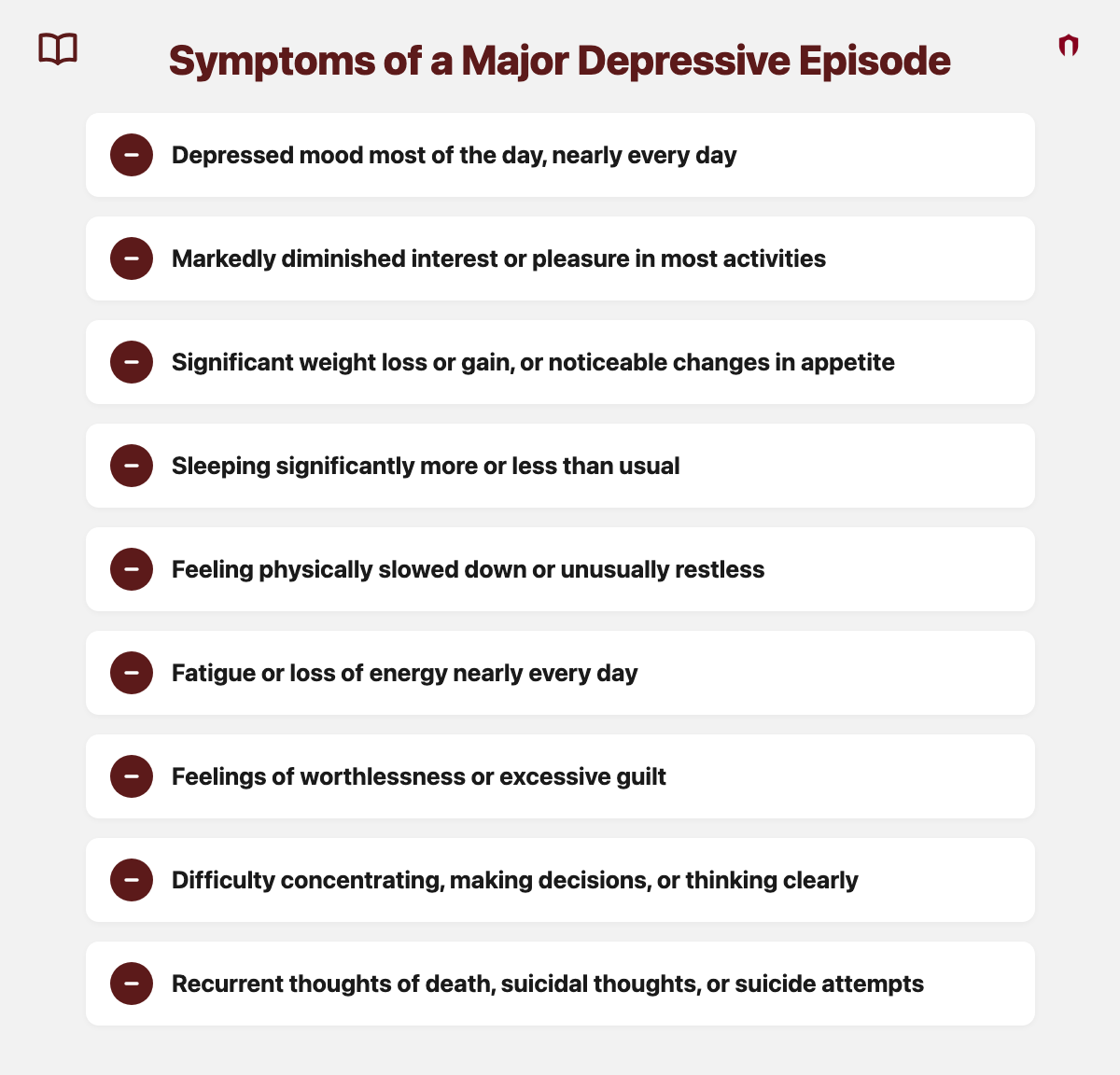
These symptoms must cause significant distress or impairment and cannot be better explained by another medical condition, substance use, or another mental health disorder.
Common Symptoms
Depression affects much more than mood. It influences thoughts, emotions, physical health, motivation, and behavior. While sadness is common, many individuals describe depression as feeling emotionally "numb," disconnected, or empty rather than simply sad.
People experiencing depression often notice a lack of motivation, decreased enjoyment in hobbies, social withdrawal, low energy, increased irritability, difficulty concentrating, feelings of hopelessness, and reduced self-esteem. Everyday tasks that once felt manageable—getting out of bed, going to work, exercising, or responding to messages—may begin to feel overwhelming.
Depression can also produce physical symptoms. Individuals may experience headaches, muscle aches, digestive issues, appetite changes, sleep disturbances, or persistent fatigue despite getting adequate rest. These physical symptoms are real and reflect the close relationship between mental and physical health.
What Causes Depression?
Depression rarely develops because of one single cause. Instead, it usually results from a combination of biological, psychological, and social factors interacting over time.
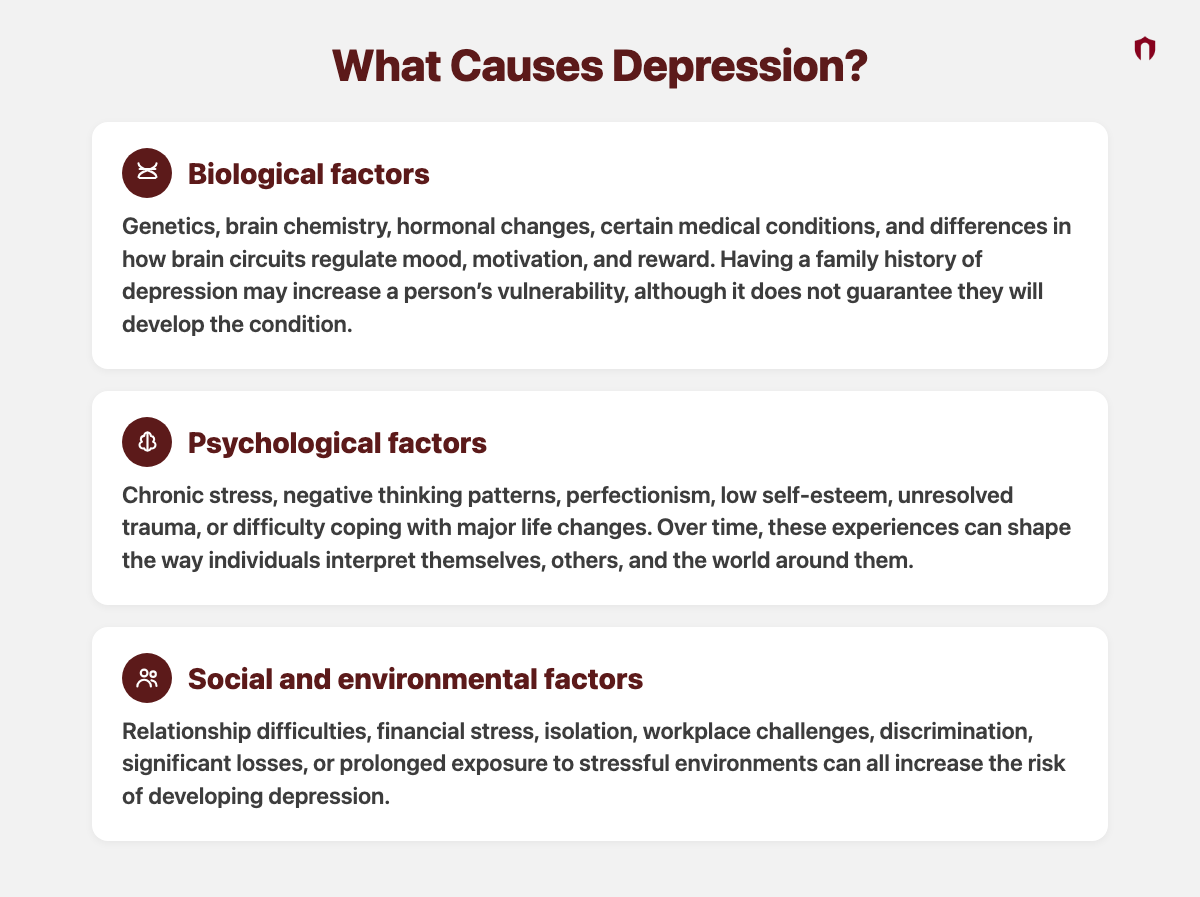
One helpful way to understand depression is through the biopsychosocial model, which recognizes that mental health is influenced by the interaction of biological, psychological, and social factors rather than any single cause.
Common Misconceptions
One of the biggest misconceptions about depression is that it reflects laziness, weakness, or a lack of willpower. In reality, depression often makes even simple tasks require tremendous effort. People experiencing depression are frequently working much harder than others realize simply to get through the day.
Another misconception is that people with depression are always visibly sad. While sadness is common, many individuals continue working, attending school, caring for their families, and fulfilling responsibilities while quietly struggling internally. Others may experience primarily irritability, emotional numbness, or loss of motivation rather than obvious sadness.
Depression is also not something that people can simply "snap out of." Positive thinking alone is rarely sufficient because depression affects emotions, thinking, motivation, sleep, energy, and even physical functioning. Recovery often requires time, support, and evidence-based treatment.
Recovery and Hope
Although depression can feel permanent while someone is experiencing it, it is highly treatable. Many individuals improve through psychotherapy, medication, healthy lifestyle changes, increased social support, or a combination of these approaches. Recovery does not necessarily mean never feeling sad again—it means regaining the ability to experience enjoyment, pursue meaningful goals, manage life's challenges, and engage fully in everyday life.
Seeking help is not a sign of weakness but an important step toward recovery. With appropriate treatment, patience, and consistent effort, most individuals with depression experience meaningful improvement and are able to build satisfying and fulfilling lives.
🧠 Your Mental Playbook
One Thing to Remember
Depression may convince you that nothing will ever change. It’s important to remember the hopelessness, helplessness, feeling like a burden, and feeling like it’ll never end are symptoms of a condition, not an accurate reflection of reality. Recovery is possible, even if it doesn't feel that way right now.
Reflect
What thoughts and beliefs feel permanent right now that would feel better if you were able to believe that things can change?
What activities and tasks are difficult to do when you feel depressed? What would be a “small win” that you’re willing to do or engage in?
If depression weren't making decisions for you, what is one thing you would want your life to look like six months from now?
Put It Into Practice
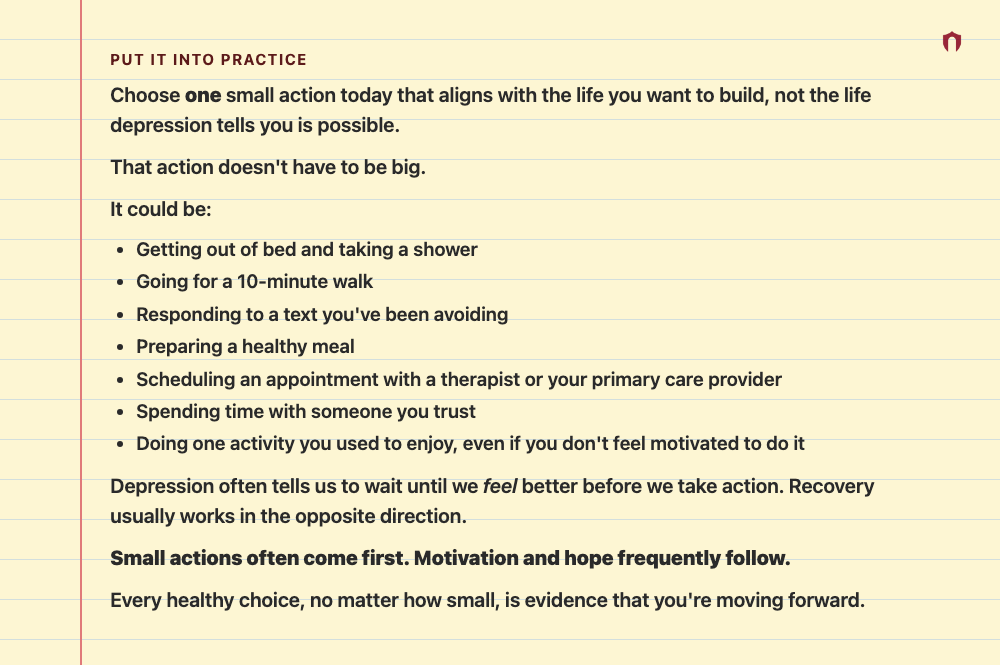
"You don't have to see the whole staircase, just take the first step." — Martin Luther King Jr.
Understanding Suicidal Thoughts
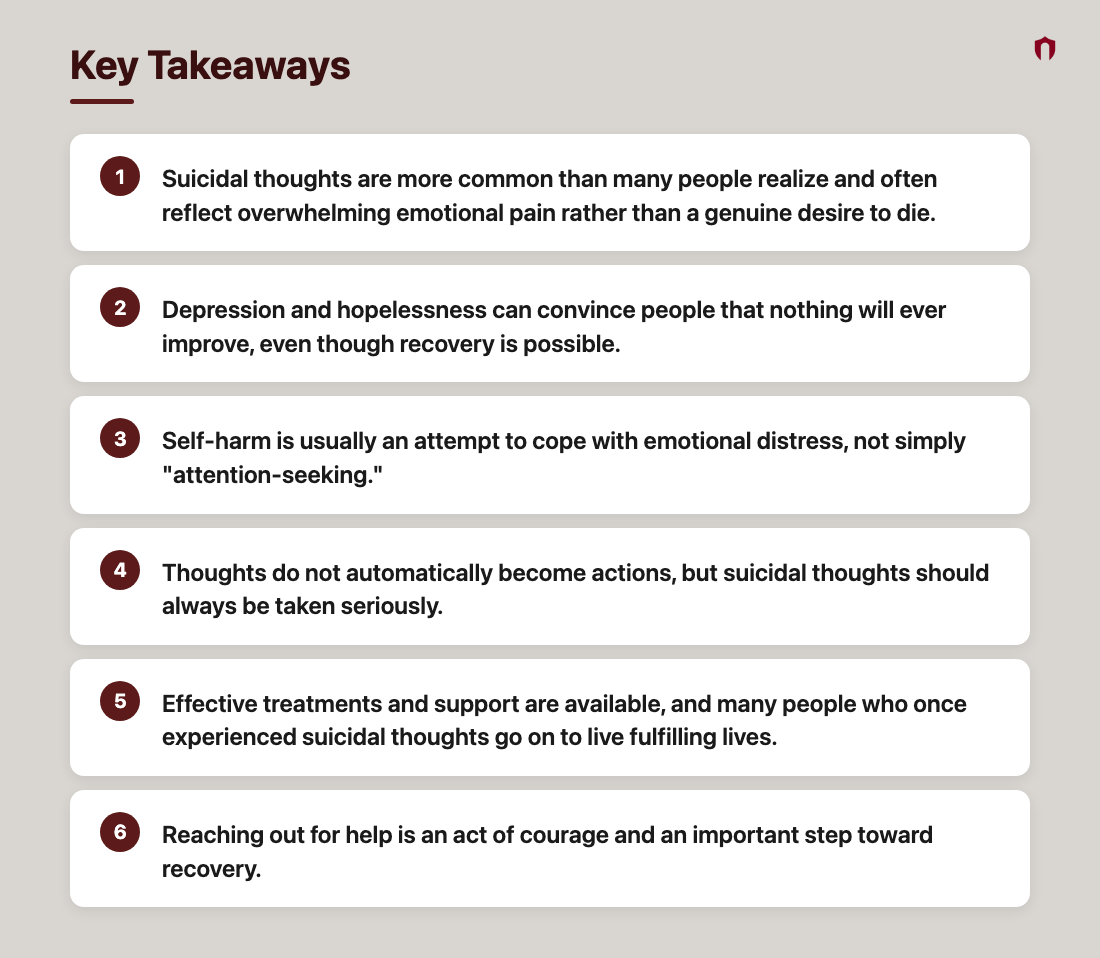
One of the biggest misconceptions about suicide is that people who think about suicide actually want to die. In reality, that's often not the case.
People experiencing suicidal ideations usually don't necessarily want their life to end, they want their emotional pain to end. They want relief. They want the hopelessness to stop. They want the exhaustion to stop. They want to escape from a situation that feels impossible.
Depression can lead to symptoms that cause psychological and emotional pain. When that pain becomes overwhelming and a person cannot imagine another way for it to end, suicidal thoughts can begin to feel like the only available escape. Think about what it may feel like to be stabbed in the side, or to be shot in the shoulder, or any other significant injury. Imagine if you believed that pain would be permanent, that you’d be in agony forever. You may not want to die, but you may see death as the only way to escape insufferable, constant, unrelenting pain.
Understanding this distinction is important.
If the goal is to end unbearable pain, not life itself, then our focus shifts toward reducing the pain and expanding the person's sense of hope and possibility.
Why Do Suicidal Thoughts Happen?
When someone has suicidal thoughts or hurts themselves in any way, it’s never for just one reason. It’s a storm, a buildup of a multitude of experiences, thoughts, disappointments, perceived failures, trauma, and pain over a period of time.
Experiences such as relationship difficulties, financial hardship, chronic medical issues, social isolation, grief, feeling like a burden to others, and “big” and “small” traumatic experiences can develop into thoughts of suicide.
Of course, not everyone who experiences these challenges develops suicidal thoughts. Those who suffer from Depression may be more likely to experience suicidal ideations due to the belief that their pain is more permanent than it really would be. When emotional pain becomes intense and feels endless, the brain may begin searching for ways to escape.
That does not mean suicide is the right solution, it just means the brain is struggling to see other possibilities. Treatment involves helping you find the other possibilities and to develop the skills to manage the emotional pain.
Understanding Self-Harm
Self-harm refers to someone intentionally hurting themselves without the intention of ending their life.
One of the most common and detrimental misconceptions about self-harm is that it’s primarily attention seeking, a cry for help. Quite the opposite – most who engage in self-harming behavior go to great lengths to try to hide it. They may wear long sleeves to cover marks on their wrists and arms, long pants to hide injuries on their thighs, and make up excuses for how they became injured. The vast majority of people who engage in self-harm do so in private, in secret, and suffer with the emotional pain that led them to hurt themselves all on their own.
People self-harm for different reasons.
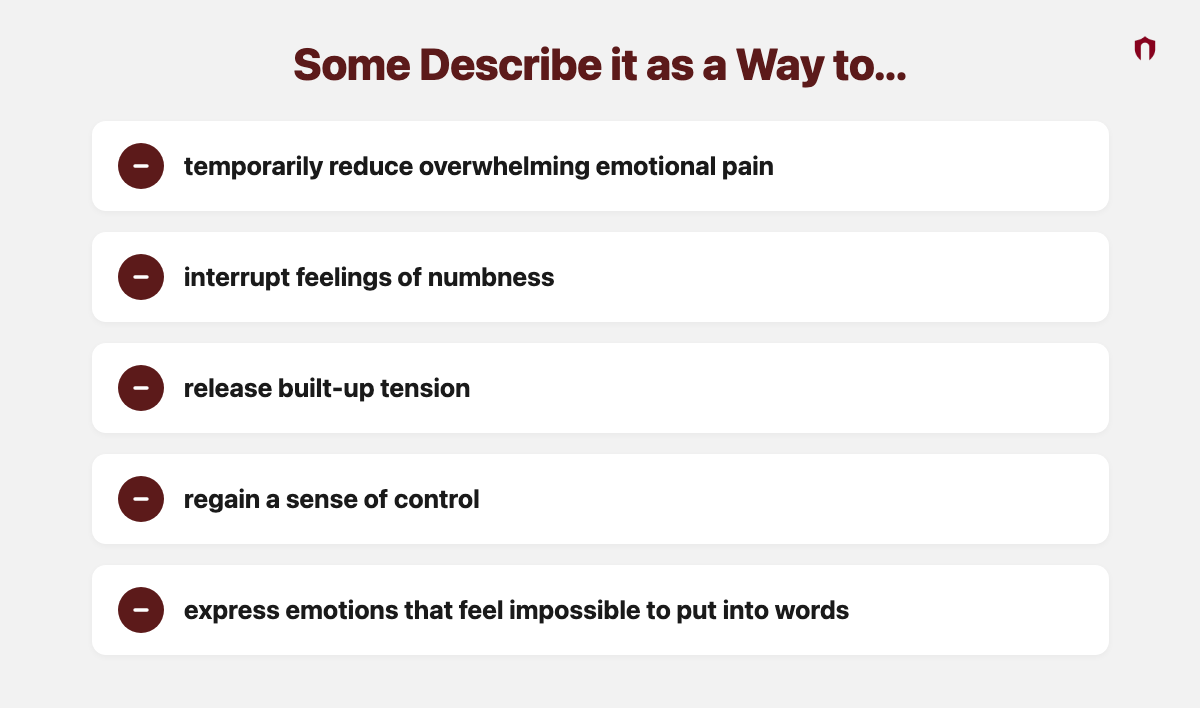
Self-harm follows a similar model to addiction. It may provide brief relief, but that relief is temporary. Over time, it often becomes part of a cycle where emotional distress leads to self-harm, followed by guilt, shame, or additional emotional pain, increasing the likelihood of future self-harm.
Learning healthier ways to regulate emotions can gradually replace that cycle.
Thoughts Are Not Intentions
It may be frightening if you or a loved one experiences suicidal thoughts. It may feel like someone who is experiencing these inclinations is in grave danger. While that could be true in some cases, it’s often not the case. Thoughts are not actions, and many are capable of not acting on harmful, intrusive thoughts. For example, you may want to yell at someone, but choose not to due to social implications. You may want to stay in bed when your alarm goes off, but you choose to get out of bed so you’re not late for work. When it comes to suicidal thoughts in particular, acting on them would work directly against our brain’s primary purpose – survival. This makes it even more unlikely to follow through on than typical negative thoughts.
Some with Depression may experience fleeting wishes to disappear during periods of extreme stress without having any intention of ending their lives. As a therapist, I often check in with clients who have suicidal thoughts by asking if they have a specific plan and means to follow through with their plan. For example, if a client says “I just want to shoot myself” but doesn’t have a gun, that’s less concerning than if they say “I want to swallow my bottle of pills” when their prescription bottle is in their medicine cabinet.
Regardless, due to the disastrous nature of acting on suicidal thoughts, they should always be taken seriously because they may signal that someone is overwhelmed and needs support. Like physical illnesses, recognizing these thoughts early often creates opportunities to intervene before the crisis becomes more dangerous.
Hope Can Return Even When You Can't Feel It
One of depression's most convincing lies is "This is how life will always be." Hopelessness narrows our perspective and convinces us that our current emotional state is permanent.
But feelings are not reliable predictors of the future. People who once believed there was no hope frequently describe being grateful they stayed alive after receiving treatment, support, or simply enough time for circumstances to change. We also make our best decisions analytically, not emotionally.
Recovery often begins long before someone feels hopeful. As discussed in other playbooks and modules on this platform, we have a tendency to wait to feel good before engaging in helpful behavior.
Sometimes hope starts with borrowing someone else's belief that things can improve until you're able to believe it yourself.
When to Reach Out
If you're experiencing suicidal thoughts, reaching out for help is critical and the time to do so is right now. That might mean talking with:
You do not have to carry this alone. If you think you might act on suicidal thoughts or you feel unable to keep yourself safe, treat that as an emergency. Contact your local emergency services or go to the nearest emergency department immediately. If you're in the United States or Canada, you can also call or text 988 to reach the Suicide & Crisis Lifeline. If you're elsewhere, contact your local emergency services or crisis hotline.
Asking for help is not a sign that you've failed, it's an indicator that you've recognized the pain has become too much to carry by yourself, and are strong enough to get the support you need.
Key Takeaways
🧠 Your Mental Playbook
One Thing to Remember
Suicidal thoughts are a signal that you're carrying more emotional pain than your mind knows how to manage, not proof that your life is beyond hope. Pain can be addressed, managed, and moved on from. With support, people recover.
Reflect
If you were supporting a close friend who was in the same emotional pain you're experiencing, what would you want them to know?
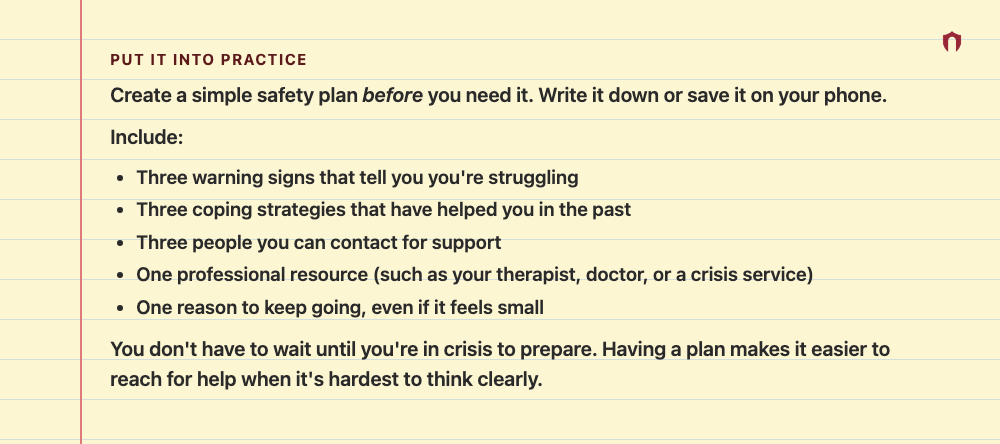
Who are the people in your life you could reach out to if things became overwhelming?
What has helped you make it through difficult moments in the past, even if only a little?
Put It Into Practice
"Hope is being able to see that there is light despite all of the darkness." — Desmond Tutu
Depression can make even the simplest tasks feel overwhelming. Activities that once brought enjoyment may no longer seem appealing, motivation can disappear, and everyday responsibilities may require tremendous effort. One of the challenges of depression is that many of its symptoms such as low energy, hopelessness, and loss of motivation also become barriers to doing the very things that help people recover.
Coping skills are not intended to make depression disappear overnight. Instead, they help interrupt the cycle that often keeps depression going. By taking small, intentional actions, individuals can gradually improve mood, increase energy, strengthen resilience, and regain a sense of purpose and control. Like any skill, these strategies become more effective with consistent practice over time.
As discussed in Playbooks throughout the Mental Fitness Lounge, it’s important to remember that when going to engage in any coping skill, it’s highly unlikely that you’re going to feel like it. You don’t need to (and often won’t) feel motivated before engaging in an action. Actions will lead to the energy, self-respect, sense of accomplishment, and subsequent motivation that you’re lacking.
Below are seven evidence-based coping skills that can help manage depression, why they are effective, and some of the common barriers people experience when trying to use them.
1. Behavioral Activation
One of the hallmark symptoms of depression is withdrawing from activities that once provided enjoyment, accomplishment, or connection. Unfortunately, the less we do, the fewer opportunities we have to experience positive emotions, which can deepen depression.
Behavioral Activation is a therapeutic approach that encourages individuals to continue engaging in meaningful activities even when they do not feel motivated. Rather than waiting for motivation to return before taking action, this approach recognizes that action often comes first and motivation follows. A common treatment goal I have with my clients is for them to engage in at least one meaningful activity per week.
The greatest barrier is believing, "I'll do it when I feel better." Depression often convinces people that they must wait until they feel motivated before acting. In reality, taking small, manageable steps is often what begins the recovery process.
2. Establishing a Daily Routine
Depression disrupts daily structure. Sleep schedules become inconsistent, meals may be skipped, hygiene routines fall by the wayside, and responsibilities begin to accumulate. A lack of routine can increase feelings of chaos and make depression feel even more overwhelming. It could make the responsibilities of the day feel crushing and unmanageable.
Creating a daily routine provides structure and predictability. Setting regular times for waking up, eating meals, exercising, and going to bed helps stabilize mood and reduces the number of decisions that need to be made each day.
One common obstacle is trying to make too many changes at once. Rather than attempting a complete lifestyle overhaul, it’s more effective to begin with one or two small, achievable habits and gradually build from there.
3. Challenging Negative Thinking
Depression changes the way people think about themselves, others, and the future. Individuals may experience thoughts such as "Nobody really knows/likes me," "Nothing will ever get better," or a particularly dangerous one: "I'm a burden to everyone around me." These thoughts can feel convincing but are often influenced by depression rather than objective reality.
Learning to identify these automatic thoughts, evaluate the evidence, and replace them with more balanced and realistic perspectives can reduce emotional distress and improve problem-solving.
A huge barrier is that depressed thoughts often feel like facts rather than opinions. It takes practice to recognize that thoughts are not always accurate reflections of reality and that emotions, distress, trauma, etc. can influence our interpretation of reality.
4. Physical Activity
Exercise is one of the most consistently supported lifestyle interventions for depression. Regular physical activity can improve mood by increasing the release of helpful neurotransmitters. It’s also a more specific form of Behavioral Activation.
Exercise also provides a sense of accomplishment and can help break the cycle of inactivity that accompanies depression. Differing from anxiety, exercise does not have to be intense to be beneficial. Even a short daily walk or light movement can have meaningful positive effects.
The biggest barrier is often low motivation and fatigue, even though physical activity is one of the most direct ways to restore energy over time.
5. Building Social Connection
Depression often encourages isolation. People may withdraw from friends and family because they feel exhausted, guilty, or believe they are a burden to others. Unfortunately, isolation frequently strengthens depression by reducing opportunities for support, encouragement, and positive experiences.
Maintaining social connections—even in small ways—can help improve mood and reduce feelings of loneliness. This may involve spending time with trusted friends, talking with family members, joining a support group, or simply reaching out with a text message.
One of the greatest barriers is believing that others do not care or that reaching out will only inconvenience them. Depression commonly distorts these perceptions, making social connection feel far more difficult than it actually is.
6. Practicing Self-Compassion
People experiencing depression are often highly self-critical. They may judge themselves harshly for struggling, compare themselves to others, and believe their struggles in life are due to their own shortcomings. The self-critical thoughts and cognitive distortions often increase shame and worsens depressive symptoms.
Self-compassion means responding to ourselves with the same kindness, understanding, and patience that we would offer a close friend facing similar challenges. It means giving ourselves credit when it’s due, and taking positive action to help our future self.
Many individuals worry that self-compassion will make them complacent or less motivated. Research suggests the opposite—people who practice self-compassion are often more resilient, more willing to learn from setbacks, and more likely to persist toward meaningful goals.
7. Setting Small, Achievable Goals
Once again, calling back to the Behavioral Activation coping skill, Depression often makes large tasks feel impossible. Looking at everything that needs to be accomplished can become so overwhelming that people avoid starting altogether.
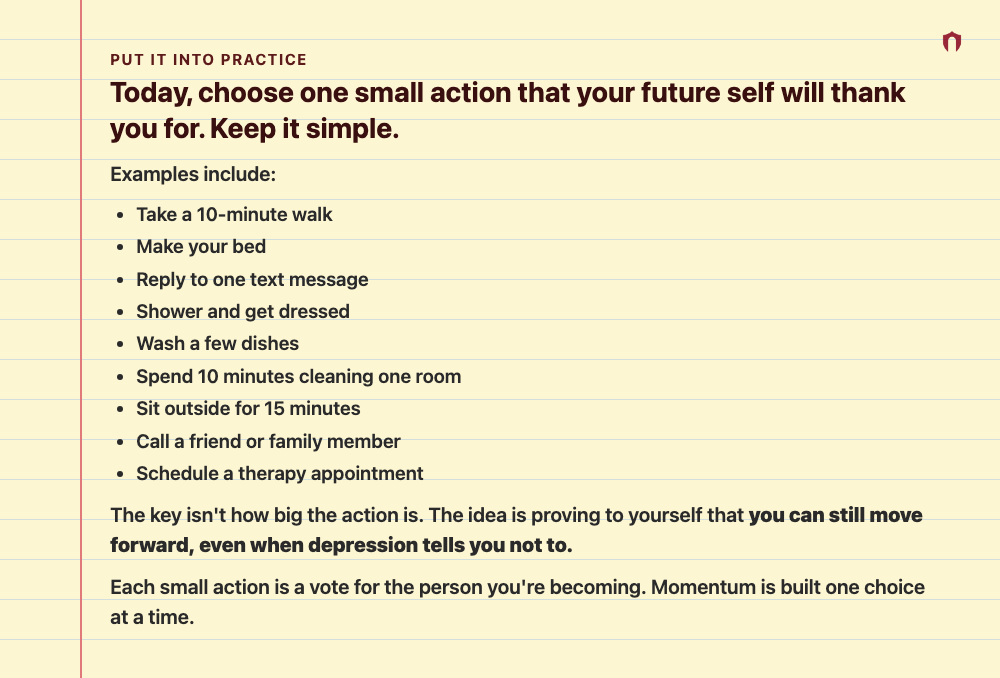
Breaking larger goals into small, manageable steps helps create momentum and builds confidence. Goals should be completely within your control to accomplish, and can be done in a short period of commitment to the activity. For example, rather than setting a goal to clean the entire house, you might begin by making the bed or washing a few dishes. Instead of thinking about completing a major project, which could be discouraging, commit to working for just ten minutes. If this can be accomplished for six consecutive days, it totals an hour of dedicated cleaning which is a large step in the right direction, and has the ancillary benefit of providing the mental benefits (sense of accomplishment, behavioral activation, etc.) on a daily basis.
The primary barrier is expecting immediate improvement. Depression recovery is typically gradual rather than dramatic. Many people overlook small victories because they are focused only on how far they still have to go.
Bringing It All Together
The most critical aspect of battling depression is not waiting for motivation, happiness, or energy to return before taking action. Recovery begins with small behaviors that slowly improve mood over time. While each coping skill may seem simple on its own, their effects build upon one another to create meaningful change over time.
Progress is just that – a progression. A short walk may improve sleep, better sleep may increase energy, increased energy may make it easier to socialize, and social support may improve hope and motivation.
The most effective approach is often a combination of several techniques consistently, along with professional treatment when needed. Recovery is rarely a straight line, and setbacks are a normal part of the process. With persistence, support, and the willingness to take small steps forward, those who are depressed can gradually regain enjoyment, purpose, and confidence in their daily lives.
Perhaps the most important lesson is this: don't wait for motivation to return before you begin living your life again. Depression often tells us that we need to feel better before we can take action. In reality, recovery often works in the opposite direction. Every small step- getting out of bed, taking a walk, reaching out to a friend, or completing one simple task - creates opportunities for your mood to improve. Progress is rarely dramatic, but over time, those small actions can add up to meaningful change.
🧠 Your Mental Playbook
One Thing to Remember
Don't wait to feel better before taking action. Small, intentional actions are often what help you start feeling better. Depression may lead you to believe you need to feel better before you engage with your life. Recovery teaches us that actions come first, and motivation follows.
Reflect
If you suddenly had the energy and motivation to engage with your life, what would you do?
Which coping skill from this module feels the most realistic for you to practice this week?
Looking back, has there ever been a time when you almost didn't do something, but afterward you were glad you did?
Put It Into Practice
"The journey of a thousand miles begins with a single step." — Lao Tzu
Depression is a relatively common mental health condition and therefore has several treatment options available. While depression can be overwhelming and persistent, many experience significant improvement with the right combination of treatment, support, and healthy lifestyle changes. Recovery looks different for everyone, and what works best for one person may not be the best approach for another. For many, combining multiple treatment methods leads to the greatest improvement.
Combination: Psychotherapy and Medication
Therapy is the most effective treatment for depression because it addresses both the symptoms of the disorder and the factors that contribute to it. Medication may be needed to supplement therapy, particularly for those whose depression is impacting their daily functioning. Depending on the severity of the depression, either one may not be sufficient on its own. While therapy is the primary catalyst for improvement, medication may reduce symptom severity, making it easier to engage in treatment, relationships, work, and other important areas of life.
Cognitive Behavioral Therapy (CBT) is one of the most well-researched treatments for depression. CBT helps individuals identify and challenge unhelpful thought patterns, increase engagement in meaningful activities, and develop healthier coping strategies. A core component of CBT for depression is Behavioral Activation, which focuses on gradually increasing participation in activities that provide enjoyment, accomplishment, or a sense of purpose.
Acceptance and Commitment Therapy (ACT) helps individuals develop psychological flexibility by accepting difficult thoughts and emotions rather than constantly struggling against them. ACT encourages people to focus less on eliminating emotional pain and more on living according to their personal values despite difficult emotions.
Interpersonal Therapy (IPT) focuses on the relationship between depression and interpersonal functioning. This approach helps individuals improve communication skills, navigate relationship conflicts, cope with grief, and adjust to major life transitions that may contribute to depression.
Other therapeutic approaches include psychodynamic therapy, mindfulness-based cognitive therapy (MBCT), and Dialectical Behavior Therapy (DBT).
The medications most commonly prescribed for depression are Selective Serotonin Reuptake Inhibitors (SSRIs) and Serotonin-Norepinephrine Reuptake Inhibitors (SNRIs). These medications work by influencing the brain’s process with serotonin, leaving more of the neurotransmitter available in the brain’s synapses. An increase in serotonin could help provide feelings of pleasure and enjoyment that people who are depressed may lack. This has proven to be helpful in mood regulation and may provide a “kick” needed to engage in coping skills developed in therapy.
Other medications, such as atypical antidepressants, tricyclic antidepressants (TCAs), or Monoamine Oxidase Inhibitors (MAOIs), may be considered when first-line treatments are ineffective or not well tolerated. Because medication responses vary from person to person, finding the most effective medication sometimes requires patience and collaboration with a medical provider.
Lifestyle Changes
First, I want to acknowledge the narrative, and I’ll call it “stigma,” surrounding mental health that leads some accounts on social media and self-proclaimed “motivators” to suggest that lifestyle changes are all that’s required to treat depression. While healthy lifestyle habits can play an important role in reducing depressive symptoms and improving overall mental health, advice to “just go outside and get some sun,” “set an alarm and wake up at 5am every day,” or “just stop feeling sorry for yourself,” imply that Major Depressive Disorder isn’t a “real” disorder and can be solved with incredibly simple measures. Lifestyle changes alone are not sufficient for depression, but they can enhance the effectiveness of therapy and medication.
Regular physical exercise has consistently been shown to improve mood, increase energy, and promote better sleep. Lifestyle changes could include: having a morning and/or nighttime routine, going to sleep at a consistent time, eating a healthy diet, limiting excessive alcohol or substance use, spending time outside, and engaging in meaningful activities.
Depression can make lifestyle changes difficult to maintain. Making small, sustainable changes over time is typically more successful than attempting dramatic lifestyle changes all at once.
Social Support
Depression causes people to withdraw and isolate, yet strong social support is one of the most important protective factors for recovery. Interacting with meaningful relationships reduces feelings of loneliness and provides encouragement during difficult periods.
Support groups may also be helpful by allowing individuals to connect with others who have experienced similar struggles. Hearing others’ stories and sharing our own can reduce shame, improve self-efficacy, and increase hope for recovery.
Other Evidence-Based Treatments
For individuals whose depression does not improve with traditional therapy or medication, additional evidence-based treatments may be appropriate.
Transcranial Magnetic Stimulation (TMS) is a non-invasive procedure that uses magnetic pulses to stimulate specific areas of the brain involved in mood regulation. TMS has been shown to be effective for many with treatment-resistant depression.
Electroconvulsive Therapy (ECT) remains one of the most effective treatments for severe depression, especially when symptoms include psychosis, severe suicidal ideations, catatonia, or when other treatments have not been successful. ECT is often misunderstood due to outdated portrayals in movies and shows, but modern ECT is performed under anesthesia and is considered a safe and highly effective treatment for some patients.
More recently, treatments such as esketamine and ketamine-assisted therapy have shown promise for some individuals with treatment-resistant depression. Psilocybin also has several studies that indicate it may be an effective way to treat depression, but there is not enough data on it yet to be considered conclusive. These treatments, when utilized, are provided under medical supervision.
Finding the Right Treatment Plan
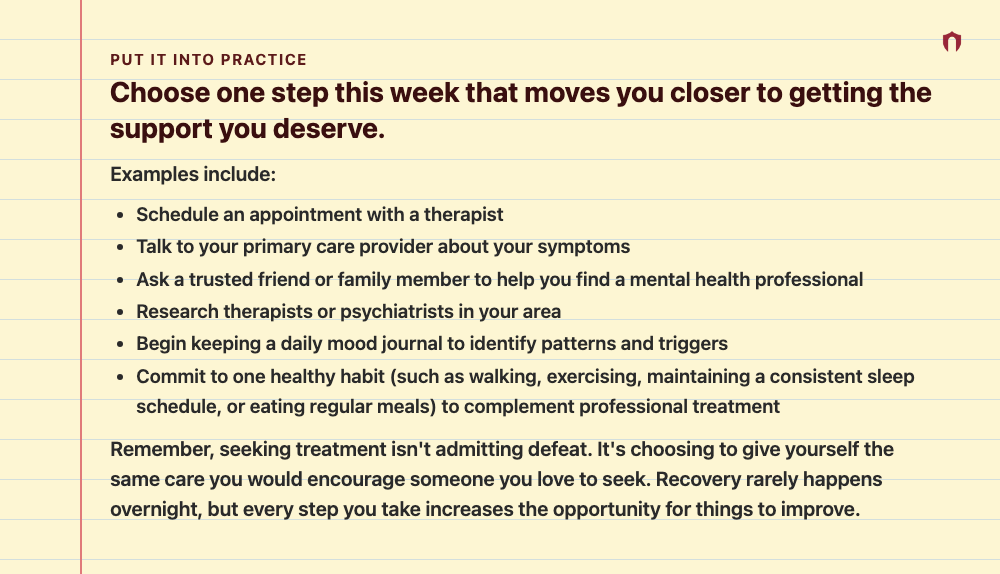
There is no single treatment that works for everyone. Some individuals experience significant improvement with psychotherapy alone, while others benefit from medication, lifestyle changes, or a combination of approaches. The best treatment plan is one that is individualized, evidence-based, and developed collaboratively between the individual and their healthcare providers. When I make a treatment plan for depression with my clients, a significant factor that dictates which route we go down is whether they’re experiencing suicidal ideations, noting how severe and frequent the presence of them are.
Don't give up if the first treatment doesn't work.
Finding the right therapist, medication, or combination of treatments can take time. Just as people respond differently to medications for blood pressure or diabetes, people respond differently to treatments for depression. The fact that one approach wasn't effective doesn't mean recovery isn't possible, it often means a different approach is needed. Persistence is an important part of the recovery process.
Recovery from depression is almost always gradual. Progress may include small improvements in sleep, energy, motivation, or enjoyment before larger changes become noticeable. With patience, consistency, and appropriate treatment, depression can be treated and a meaningful recovery helps people return to a productive, fulfilling, and meaningful life.
🧠 Your Mental Playbook
One Thing to Remember
There is no single "right" treatment for depression. Recovery is about finding the combination of tools that works for you and giving them time to work.
Reflect
If you've sought treatment before, what helped? What didn't?
Are there barriers (fear, stigma, cost, uncertainty, pride, time, etc.) that have prevented you from asking for help?
If you knew there was a treatment plan that could significantly improve your quality of life, what would motivate you to take the first step?
Put It Into Practice
"The best way out is always through." — Robert Frost
Work one-on-one with Zack to build a plan tailored to your situation.